Livres d’heures—like the famous Les Très Riches Heures de Duc de Berry—were medieval Books of Hours (an ‘hour’ in the Middle Ages being defined as an inexact space of time allotted either to religious or business duties). They functioned both as works of art and personal tools, assisting their owners in monotheistic spiritual devotion with cycles of prayers, images, and readings tailored to the hour and season.
Inspired by historical forms, Falkner invites the hand of chance into the mix and works with poems, short texts, and game and divination methods to produce contemplative image-objects. The book was the original portable device, and here the book form is used as a deliberately slow media format both to complement and replace ubiquitous tiny digital devices the way urban planners deploy obstacular infrastructures for traffic calming, or durational performance art challenges both artist and audience to elongate attention from its habitual mode, in order to experience a rupture from everyday overculture reality.
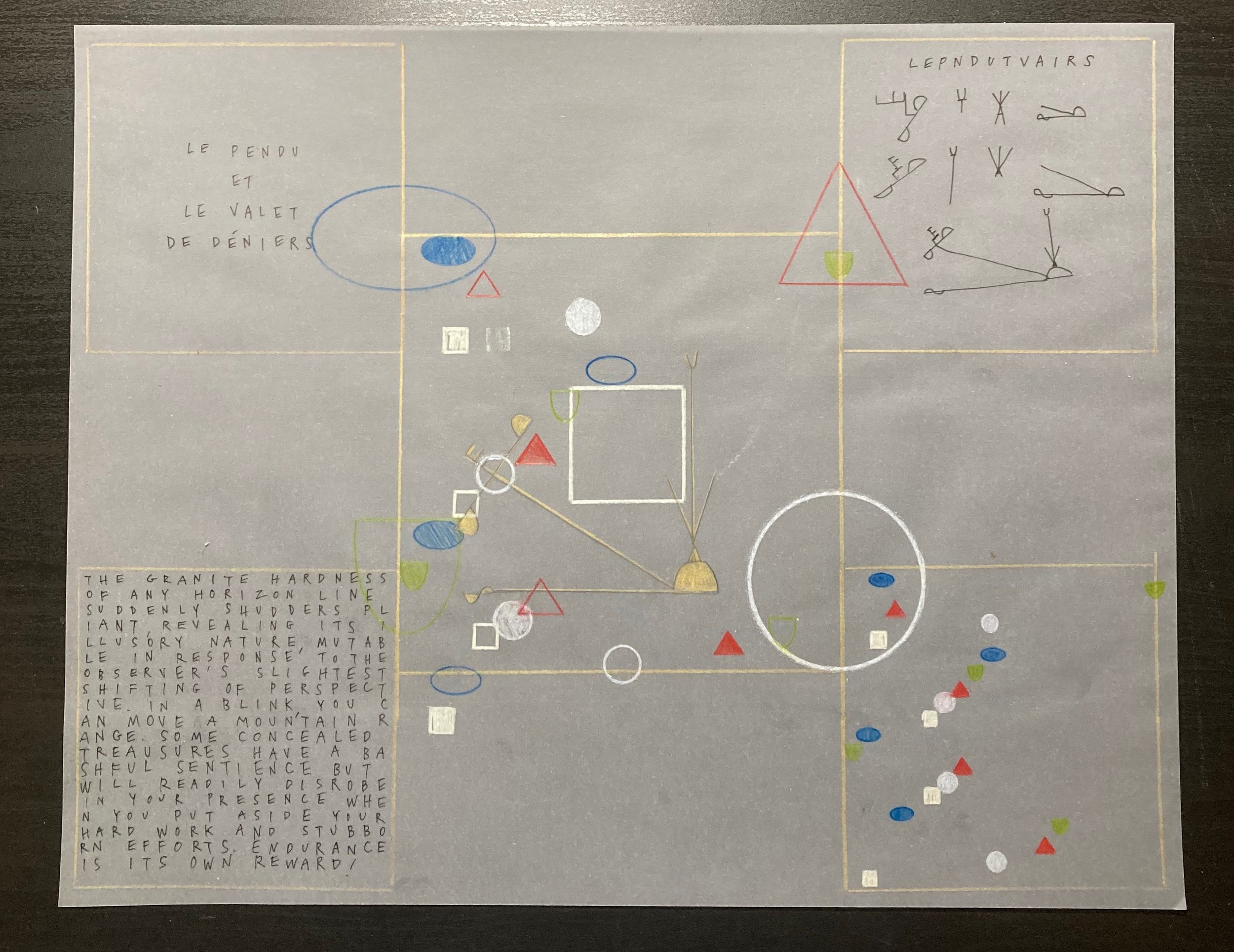
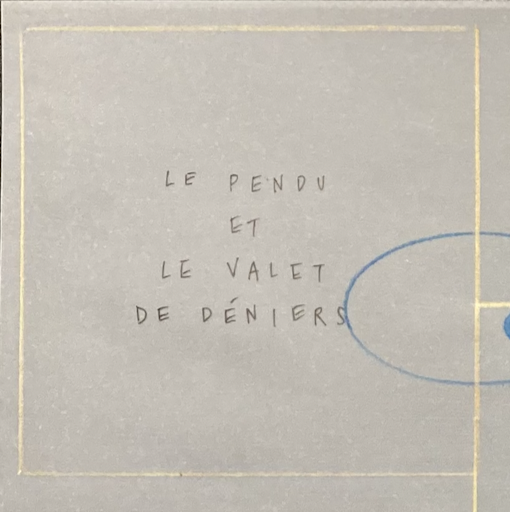
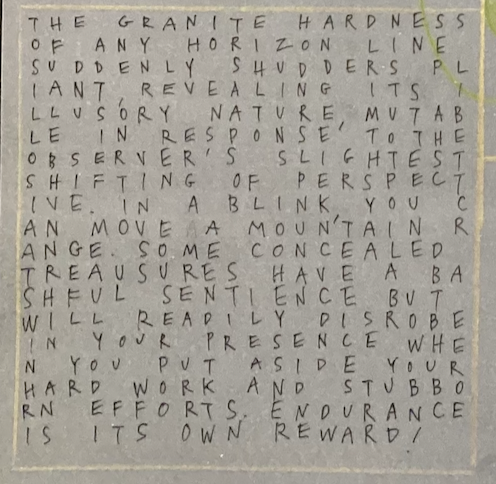
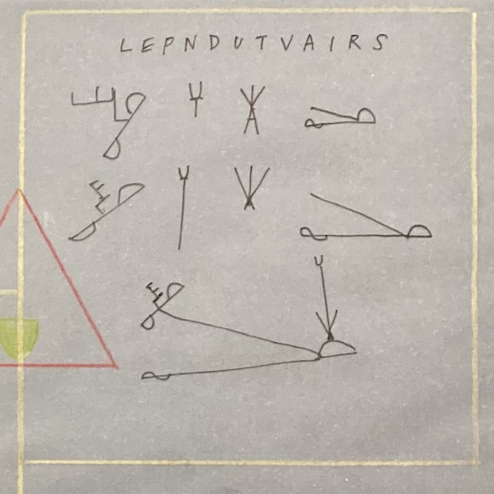
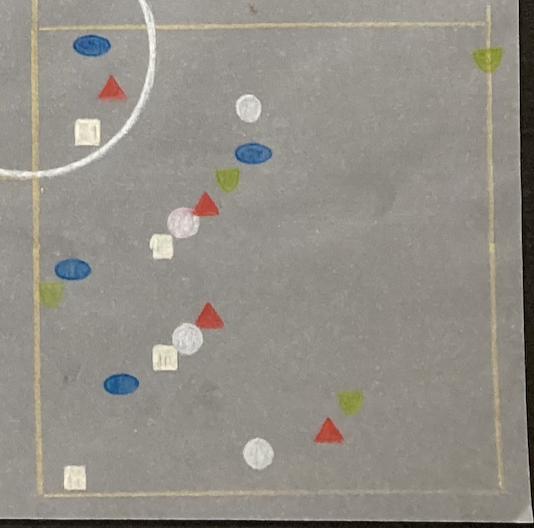
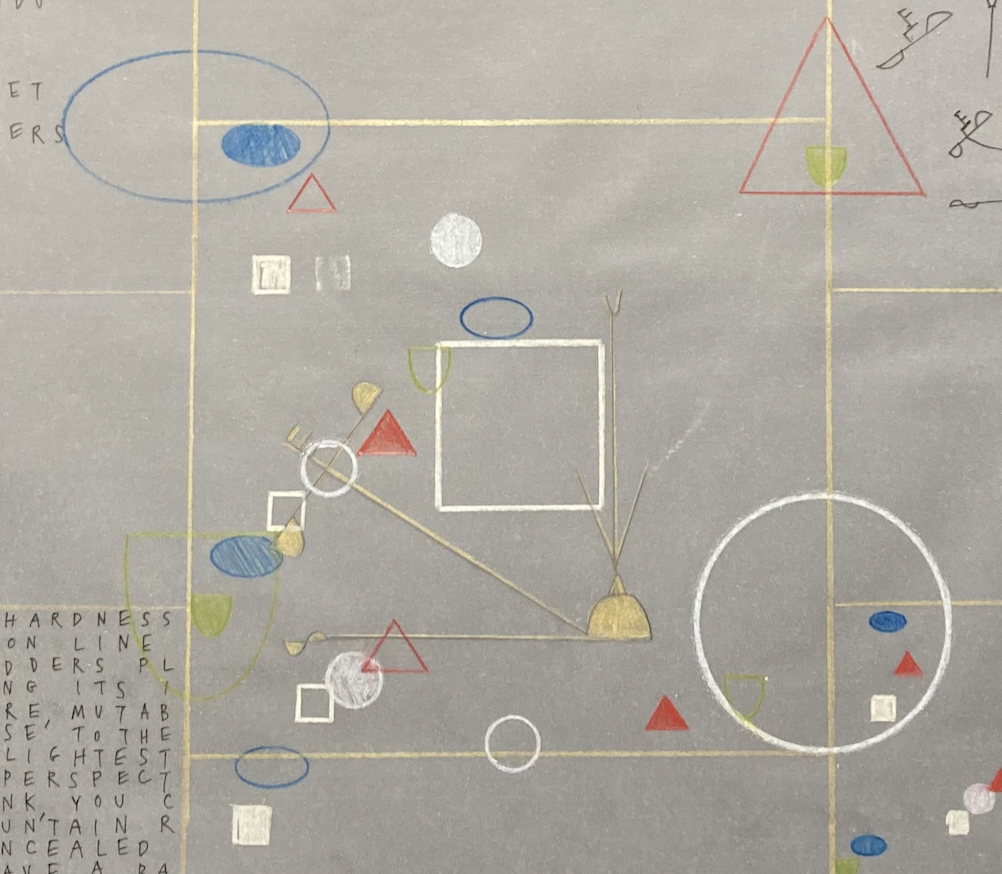
oracular poem sigils, 2022-
each page combines numerous oracular techniques and sacred geometry to provide its beholder with multivalent modes of visual contemplation and energetic activation upon a temporally-pertinent text—as one finds in a Book of Hours, grimoire, or yantra thangka. Divination is a ritual dance where we can invite the ancestors and personal Unseen partners to grab hold of the hand of chance and lead us all from the diviner's language-based prompts into other realms of being and sensing, where we can retrieve advice and assistance in transformation and manifestation.
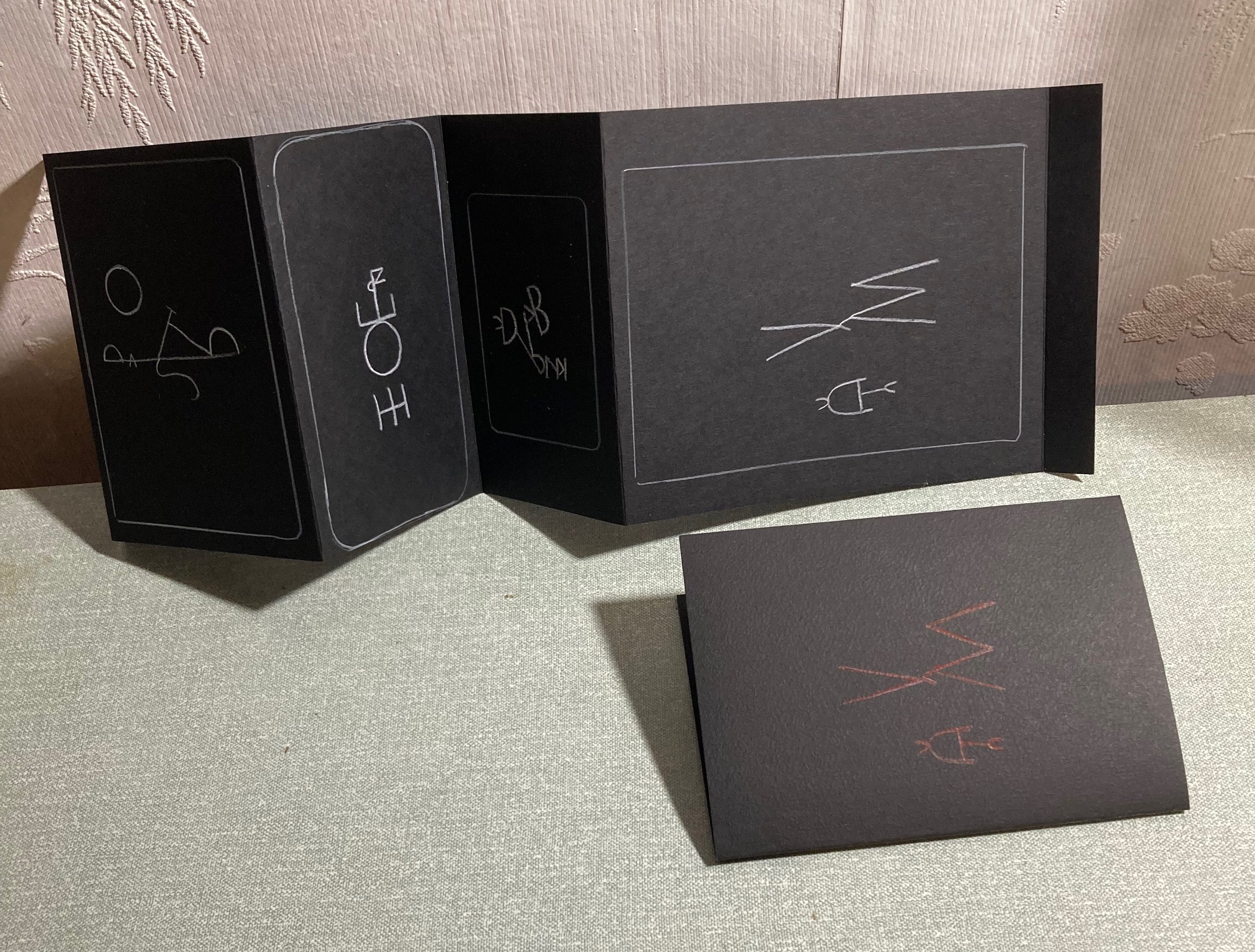
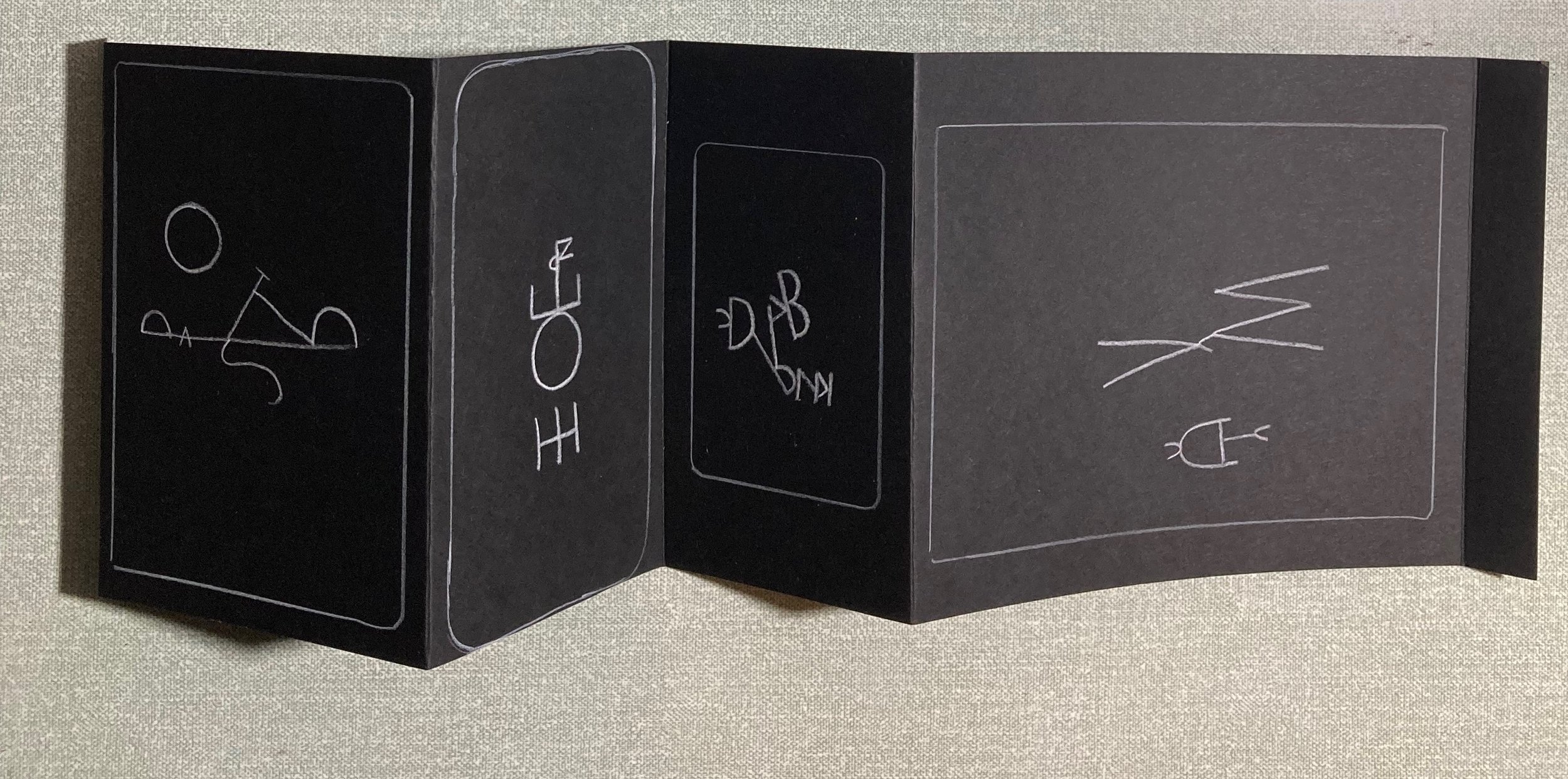
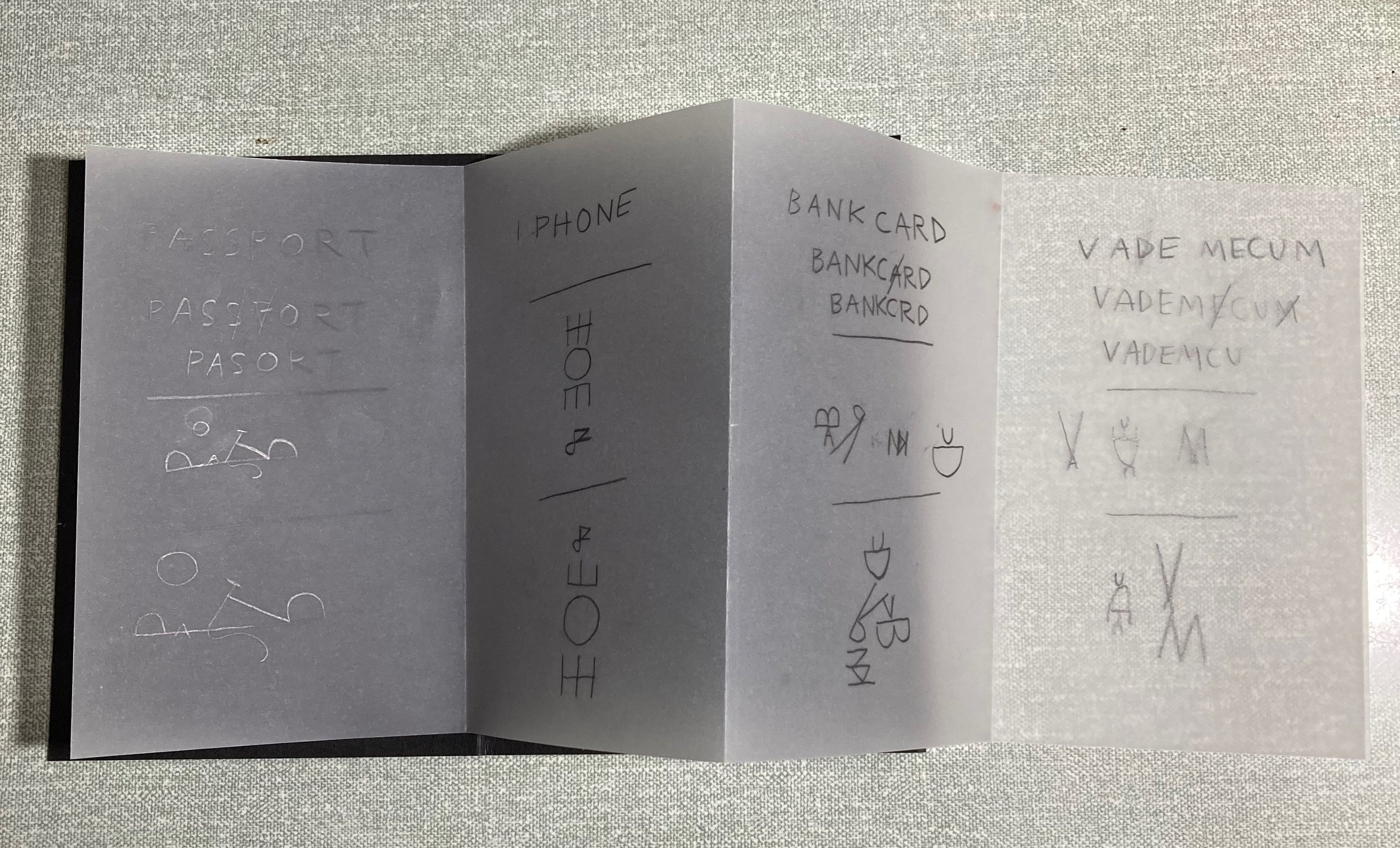
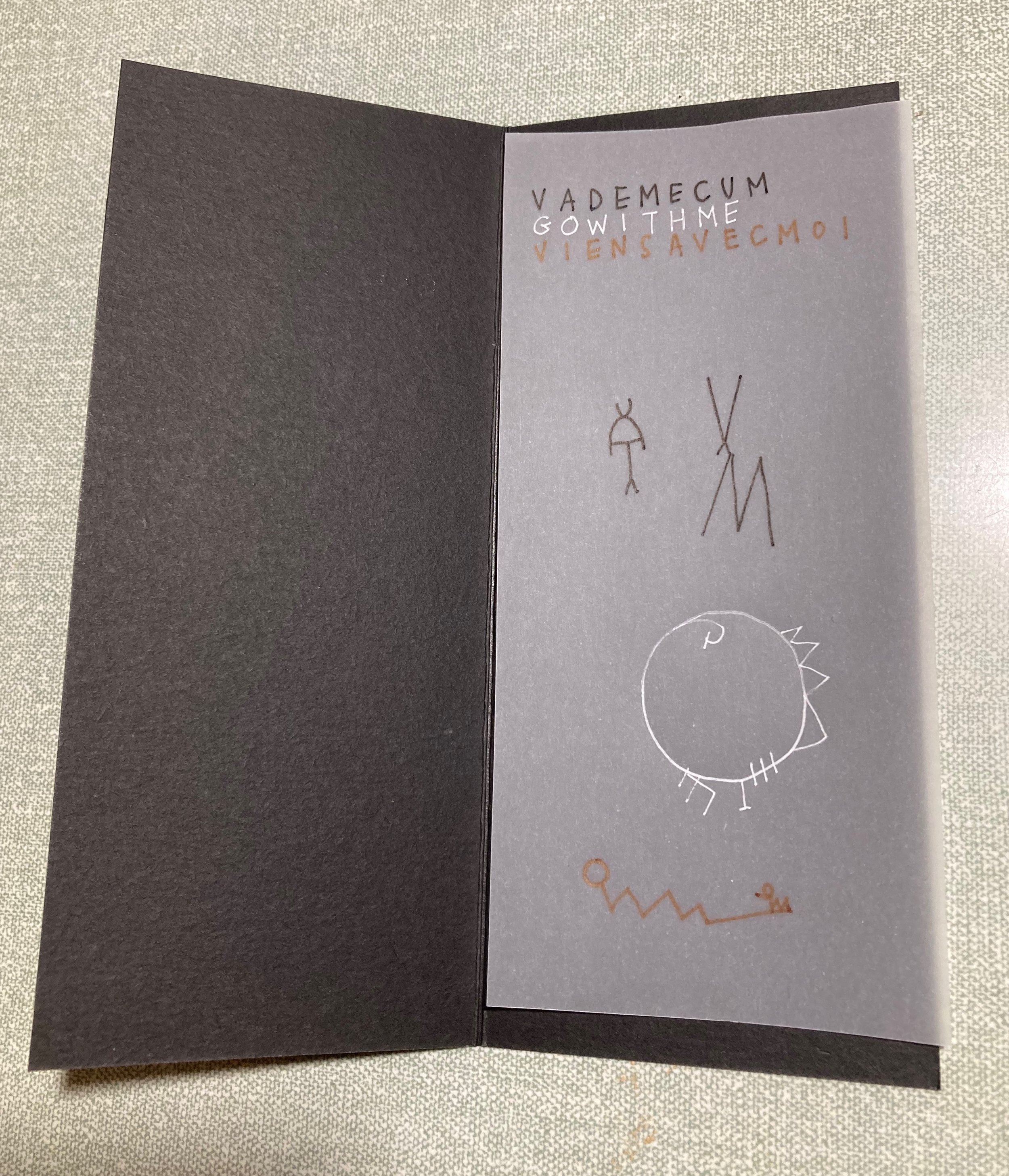
VADEMECUM, 2022-
The vade-mecum or vademecum has come to be a term used in both English and français for a book (or increasingly, other objects and devices: including the smartphone) indispensable and to be frequently consulted, and especially that fits in a pocket on one's person--French and English etymology tells us that since the 17th century both languages have used the Latin to describe essential guidebooks and such--vade mecum literally means "go with me" or "viens avec moi." These vademecum play off and with and against our contemporary essential portables, to supplement, replace, distract from, and counteract as needed.
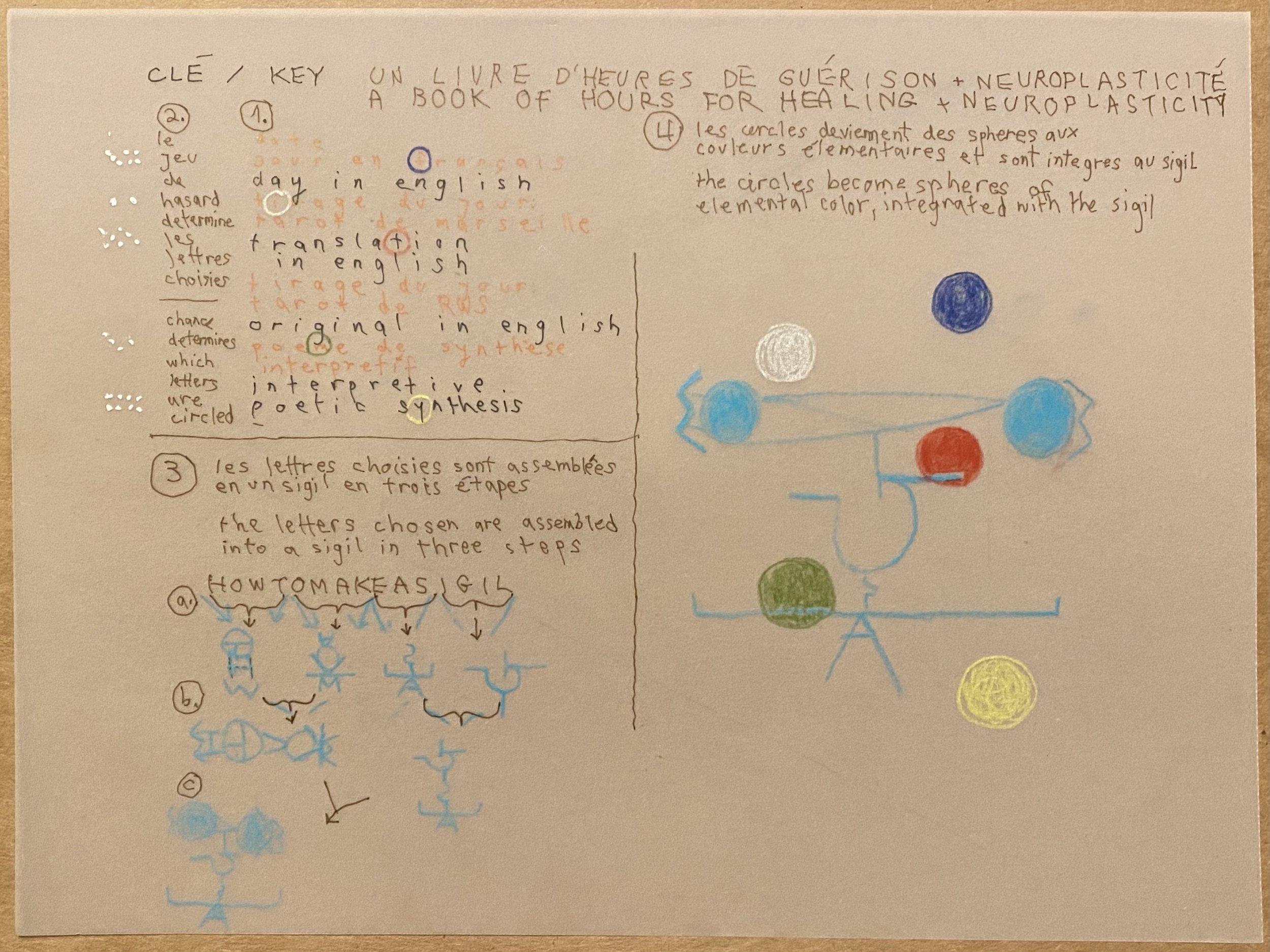
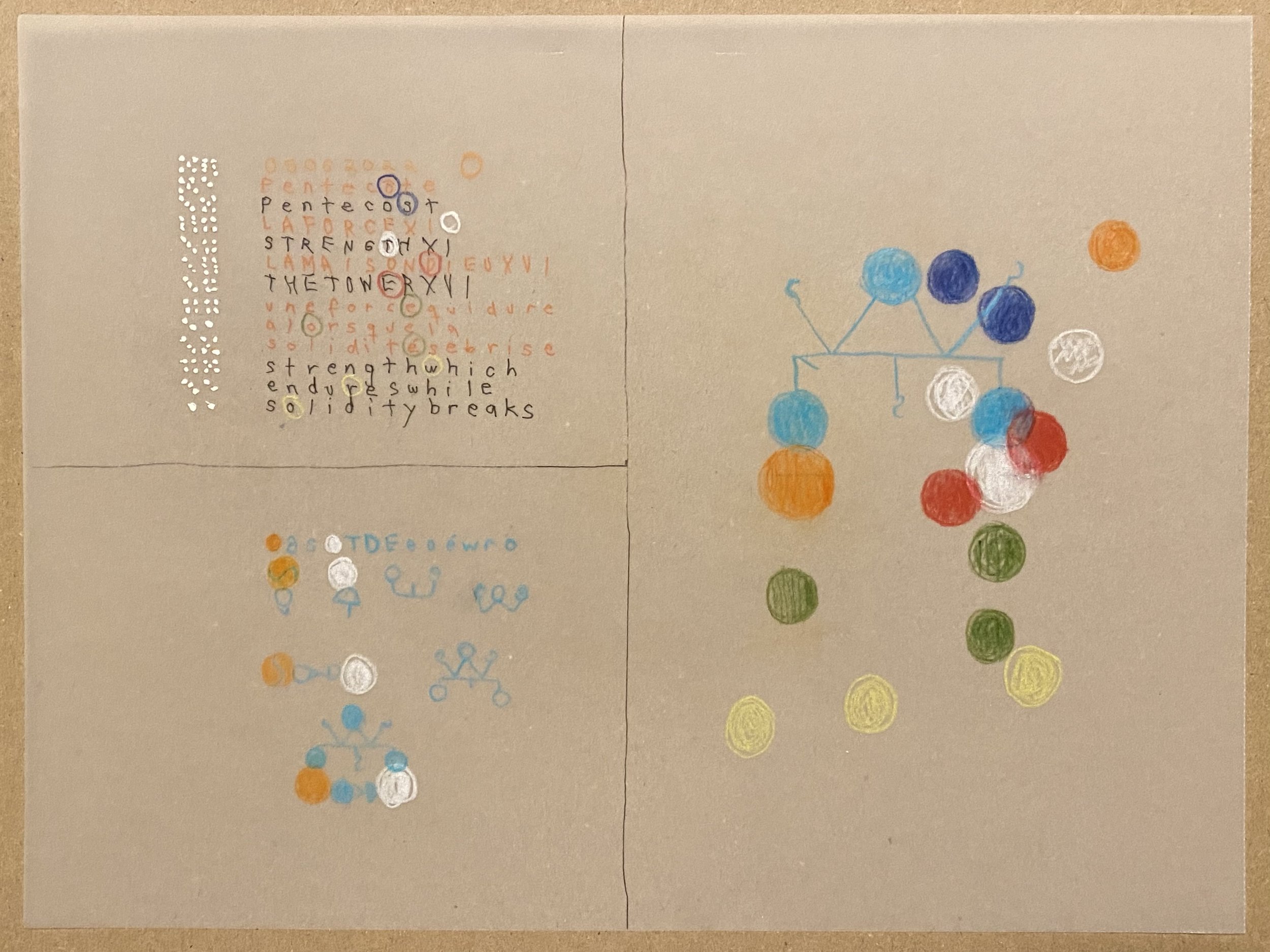
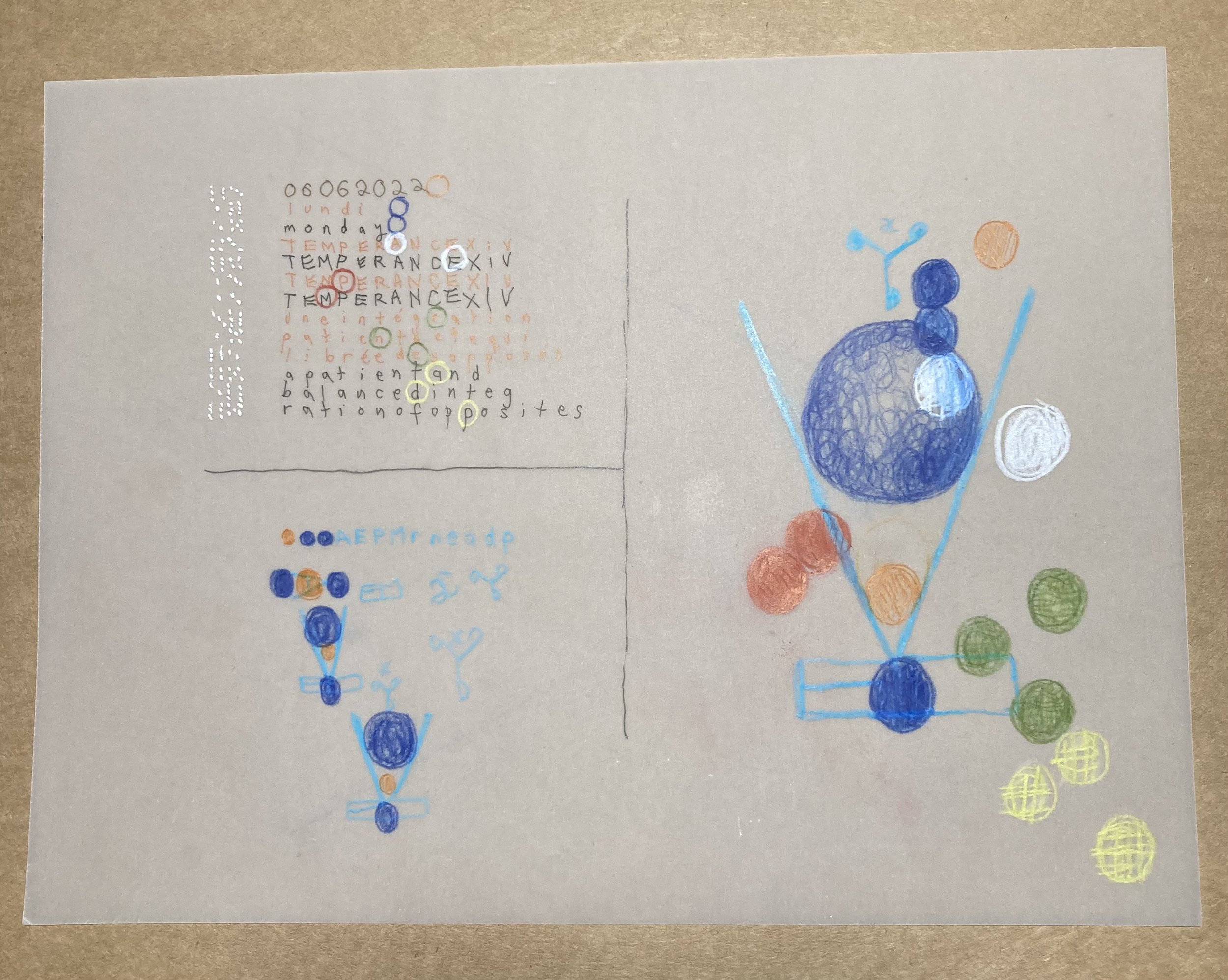
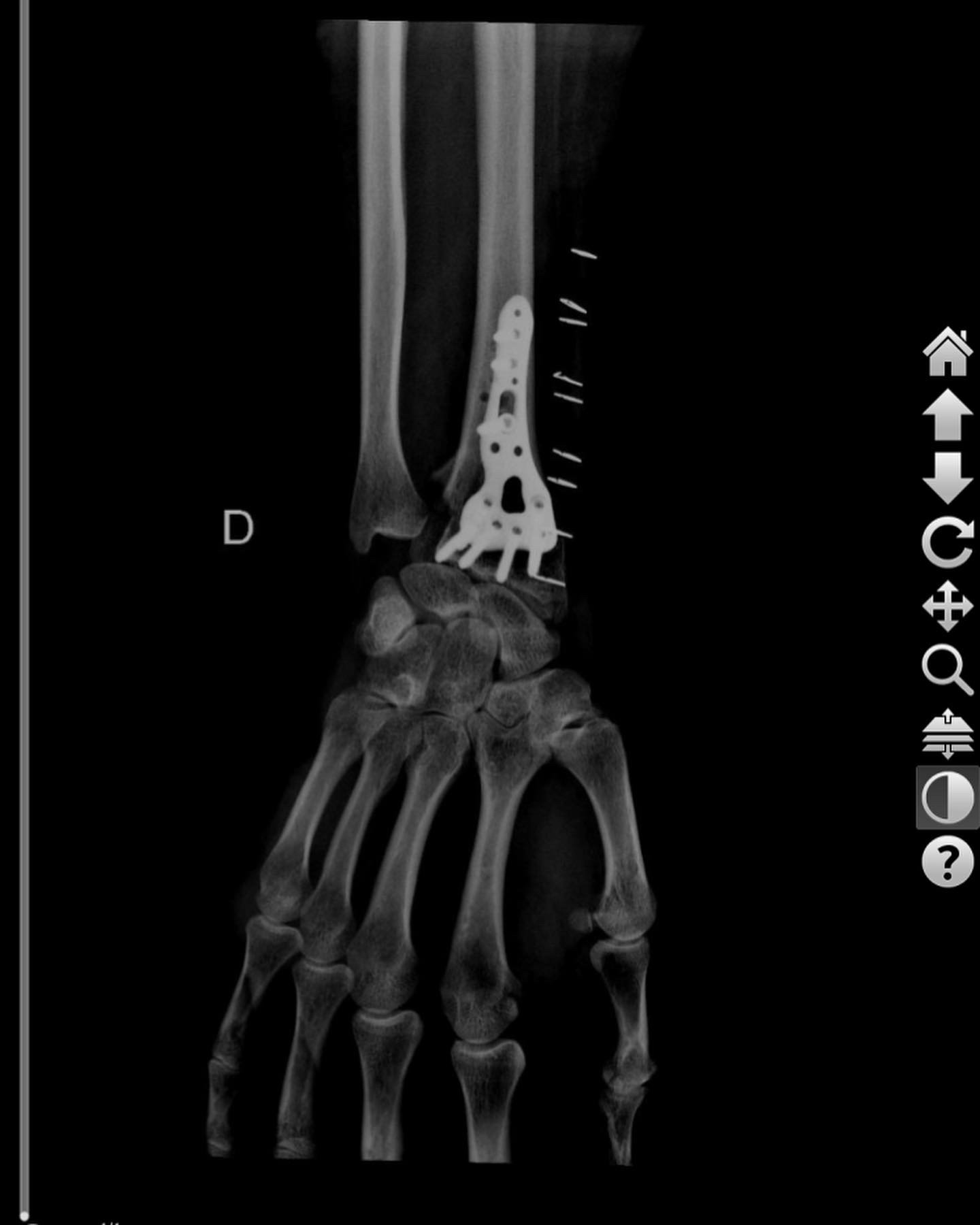
* estuaries/estuaires, book 1/livre 1 - the book of hours of neuroplasticity / un livre d’heures de neuroplasticité
I have several times in several parts of the world felt most at home when living next an estuary, where twice daily the salt and fresh water alternately ebb and flow, taking turns bringing their different qualities to the inhabitants and ecosystem who thrive on the restless mingling rhythms. Finding balance in a state of constant titration is a recurring pattern for me also present in my interdisciplinary multimedia artmaking and living bilingually between two languages.
necessity is the parent of invention / a new book of hours for my rehabilitation; a daily concatenation of nondominant-hand writing, drawing, tarot divination, and a poem-drawing-sigil
la necessité engendre l'invention / un nouveau livre d'heures de guérison; une pratique-entraînement quotidienne et gauchere d'ecriture, dessin, tirage de tarot, et poésie magique
I had begun a new series, estuaires/estuaries, exploring the titrations and flows parallel between emigrating, acquiring another primary language, and living on a tidal estuary rhythmically reshaping itself and its environment on regular rhythmic ebbs and flows influenced by weather, the moon, and human activity. beginning to write bilingual short poems for catabolization and recombinant contemplative reassemblage via sigilization, stopping to meditate and observe at pilgrimage points along my daily walks along local rivers and rivieres. then one day i was on my bicycle, until i wasn’t, and my mostly-dominant hand for the last 50+ years was the point of contact with pavement that broke my fall and, in so doing, transferred shock waves sufficient to fracture my radius.
hand therapists recommend handwriting and drawing circles. here the vajrayana 5-element colors join with turquoise and coral to enliven the circles into elemental spheres; an accident or injury makes it easy to contemplate impermanence and mortality, and as i draw i am reminded how when the body dies it disintegrates back into the elements.
performance, ritual and process have always been a part of all my visual and textual work, at times behind the scenes or as unnamed/uncredited collaborators—now they are all to the forefront center stage at once.
upon emigrating 2 years ago i had started thinking about acquiring bilingualism as parallel to the tidal estuaries i tend to always live on, and how that location/psychogeographic influence is part of my artistic and thinking and cultural practices—i am now seeing injury-necessitated training in ambidexterity through this same lens of rhythmic but unfixed/untidy identity-knowledge boundary concepts, a systems-thinking approach to breaking down and building back, constant fluctuations and titrations. that the first dialectical tarot pull on this book of hours was strength + tower (see synthesis on drawing) seemed a confirmation of this larger process that encompasses both the rupture of breaking down and the regeneration, play, purpose.
the dialectic of injury/healing as an artistic medium normalizes/de-dramatizes/recontextualizes states of collapse, loss, breaking/breakdown, disintegration. Non linear, more cyclical. Antipurity, de-anthropocentric and reconsidering received notions of utility, beauty, efficiency.
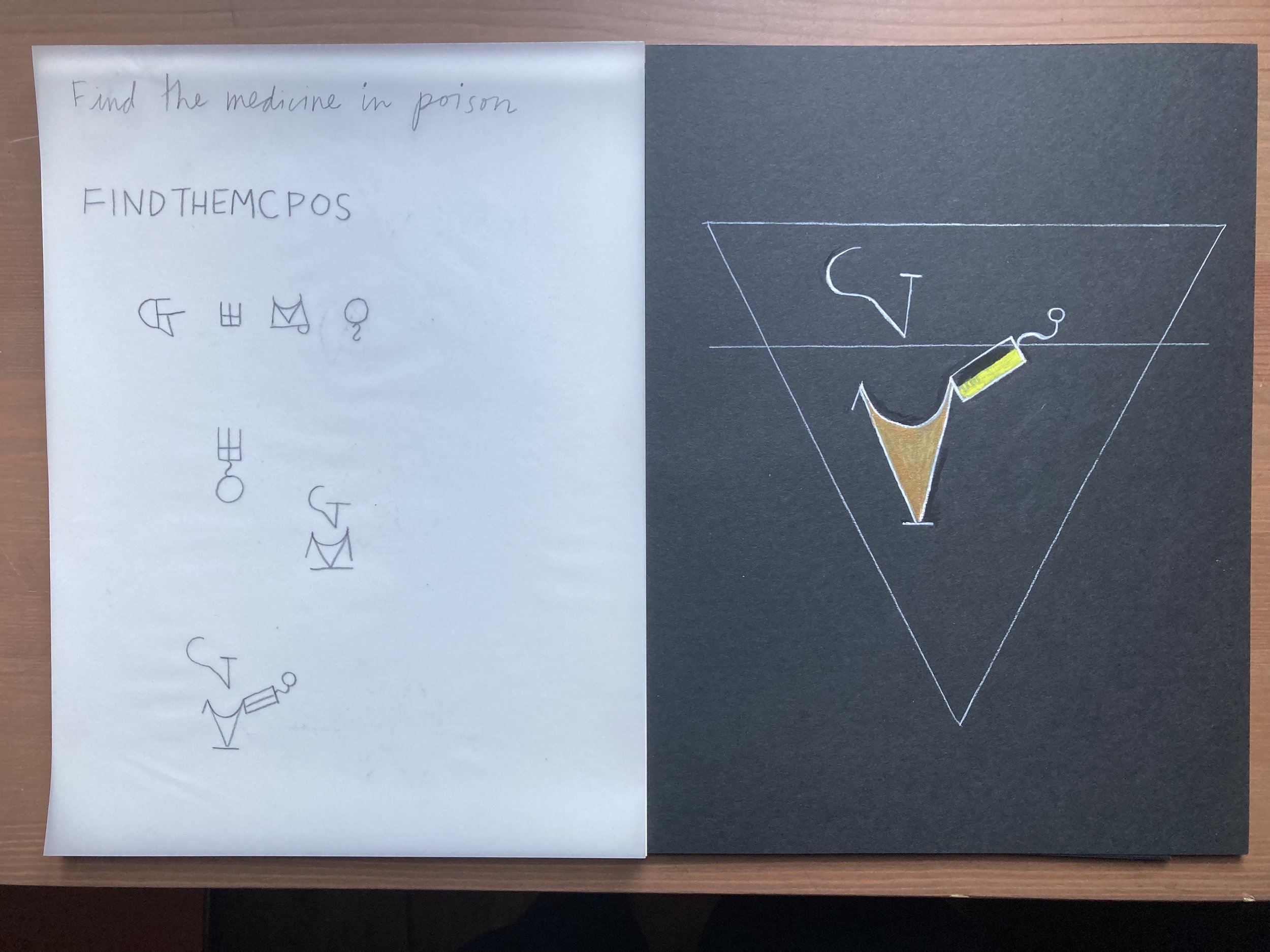
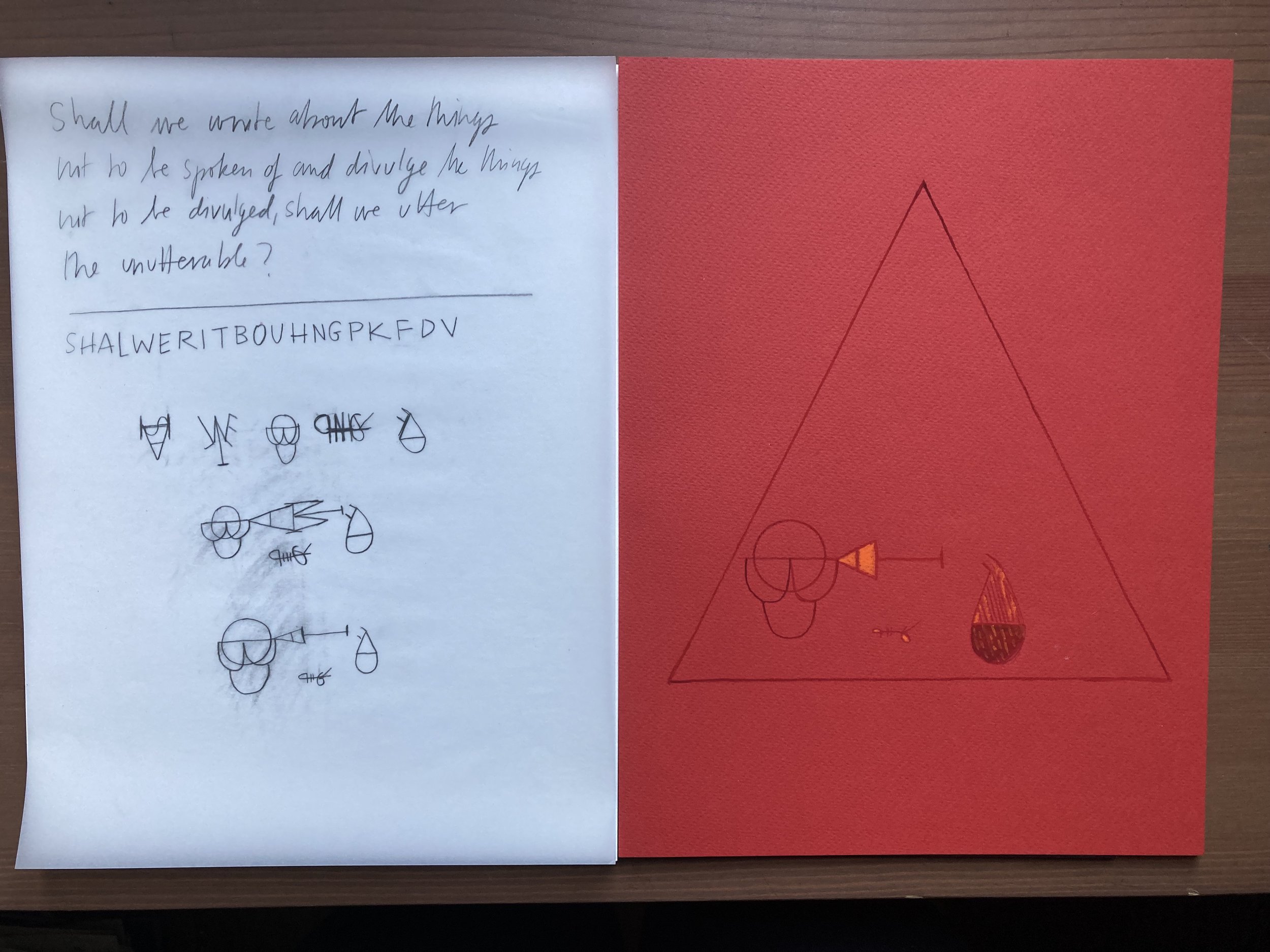
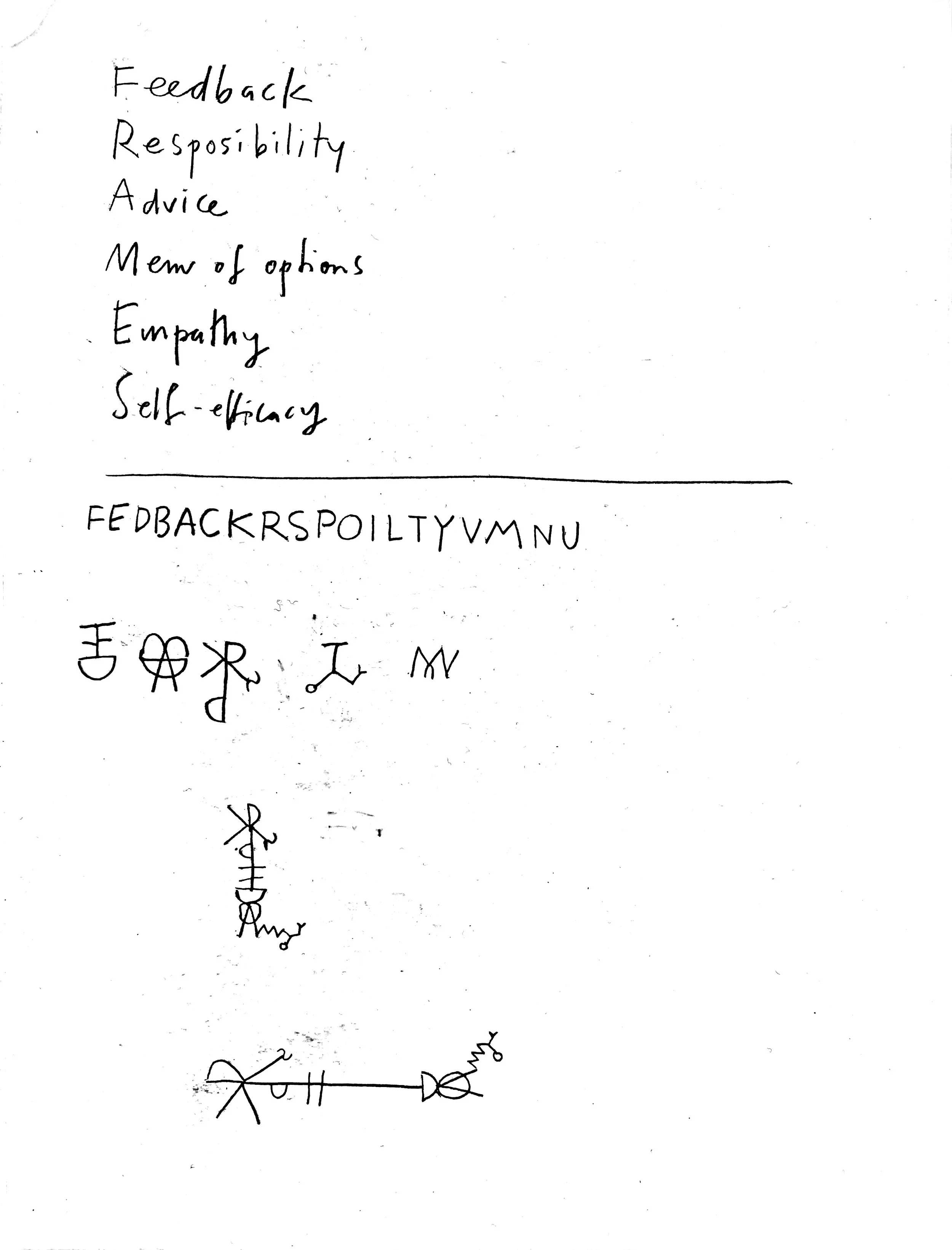
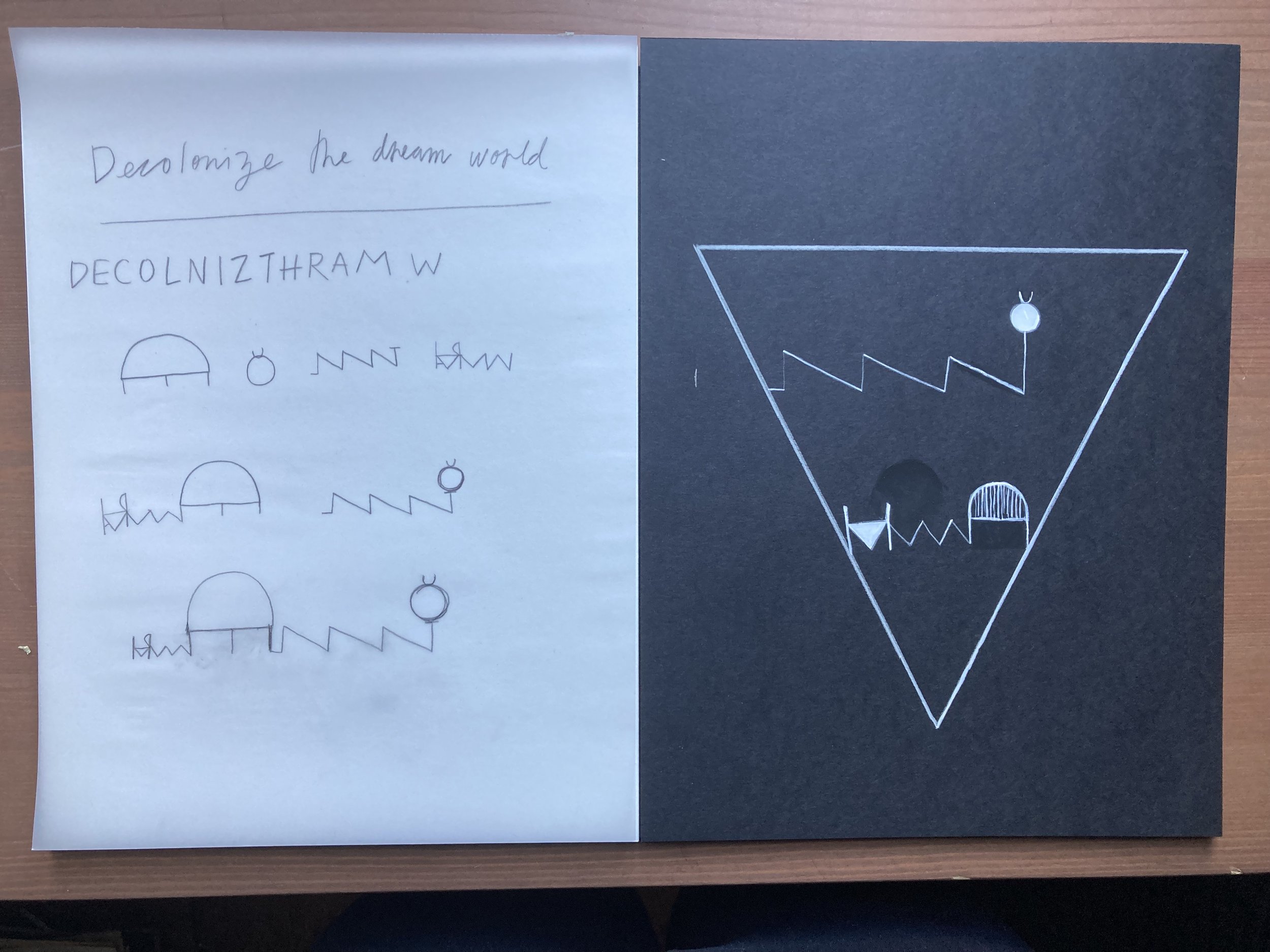
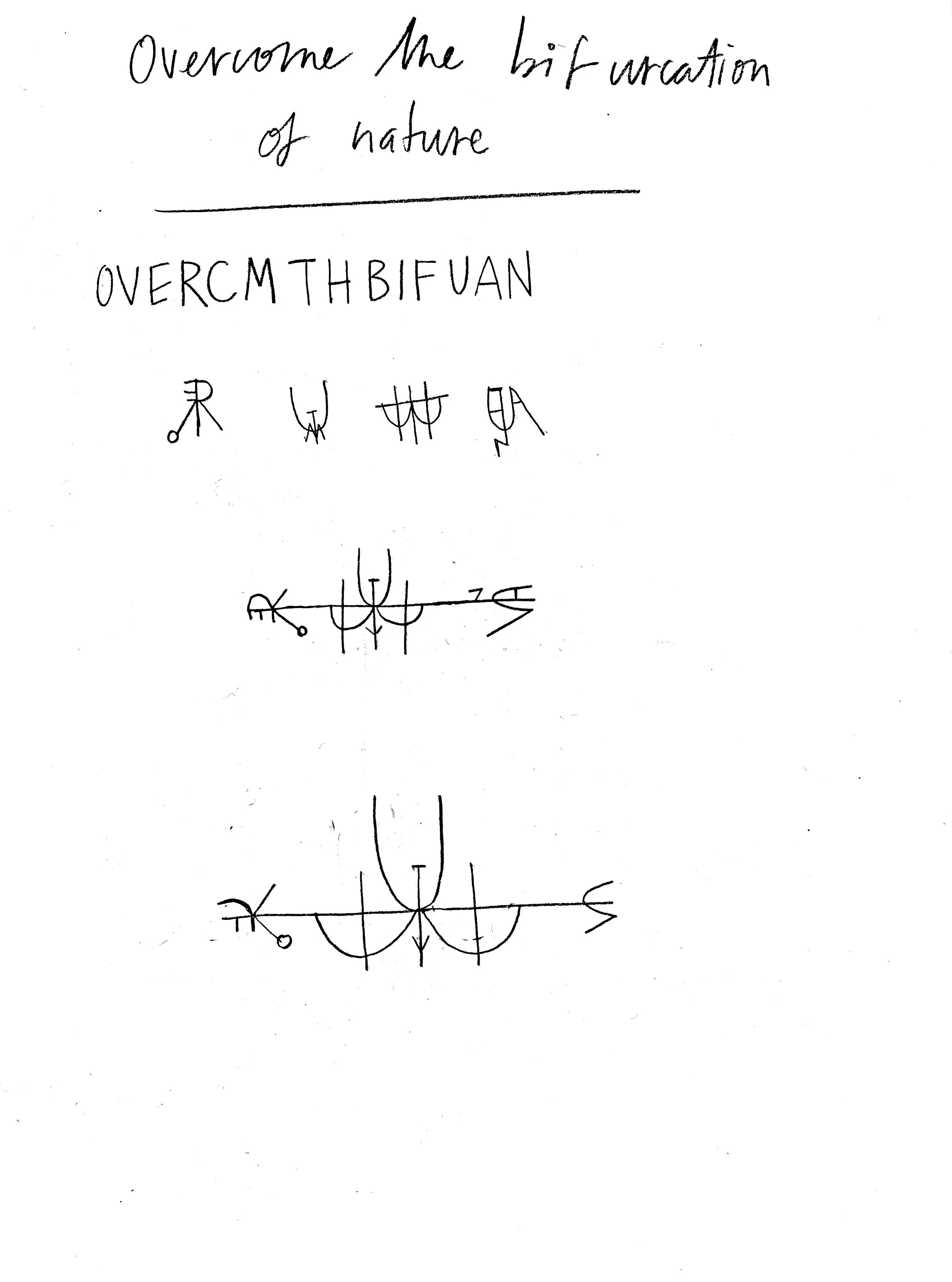
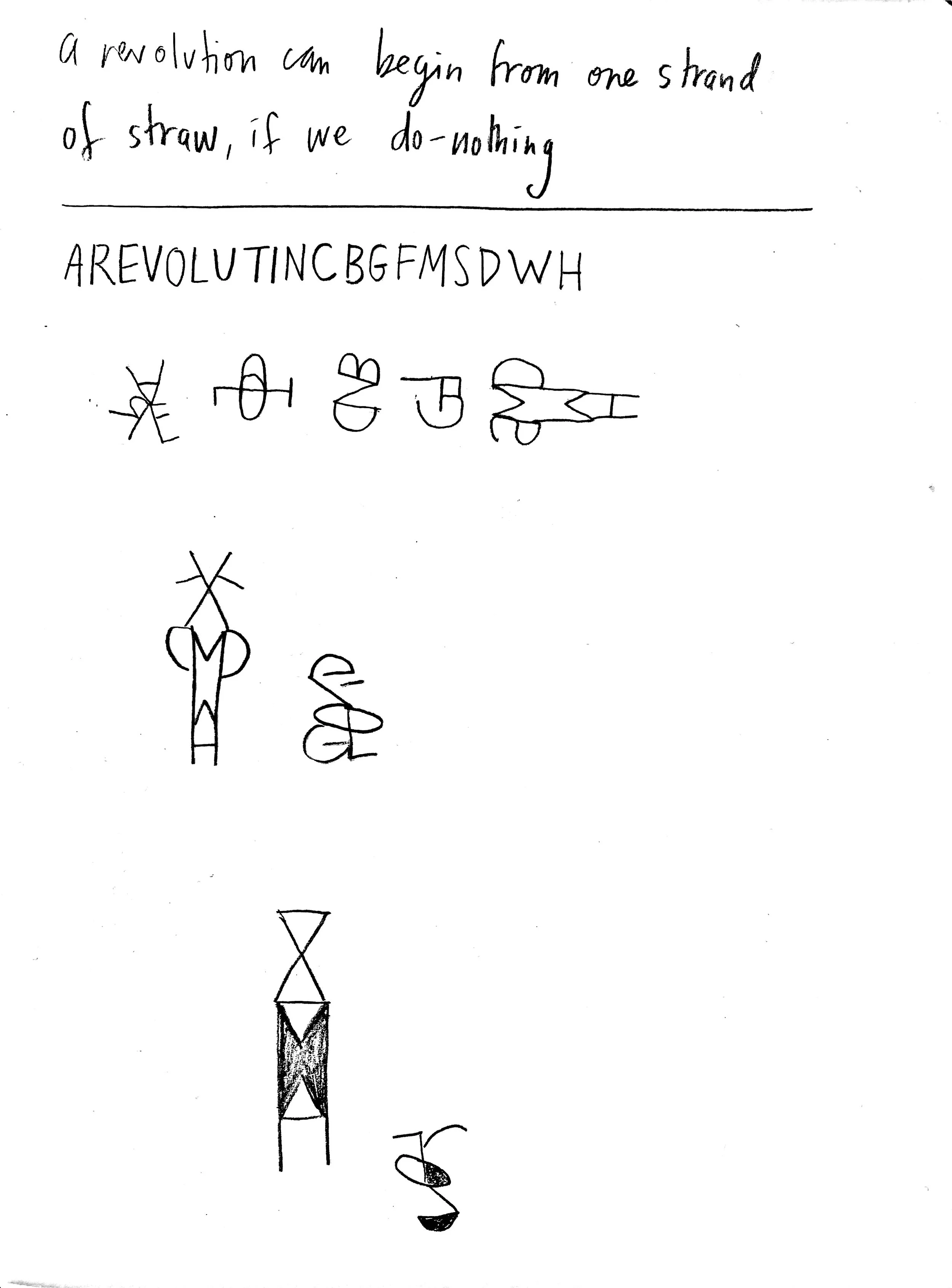
A BOOK OF HOURS FOR THE CTHULUCENE, 2018-2020
The beginning of the Book of Hours project.
Two pieces from A Book of Hours for the Cthulucene are included in the publication from Battery Journal, Uni-Verse Poetry - Prints - Proofs by Visionary Humans
Available now at: https://www.batteryjournal.org/uni-verse-poetry-prints-proofs-by-visionary-humans
A Book of Hours for the Chthulucene
2018—2020
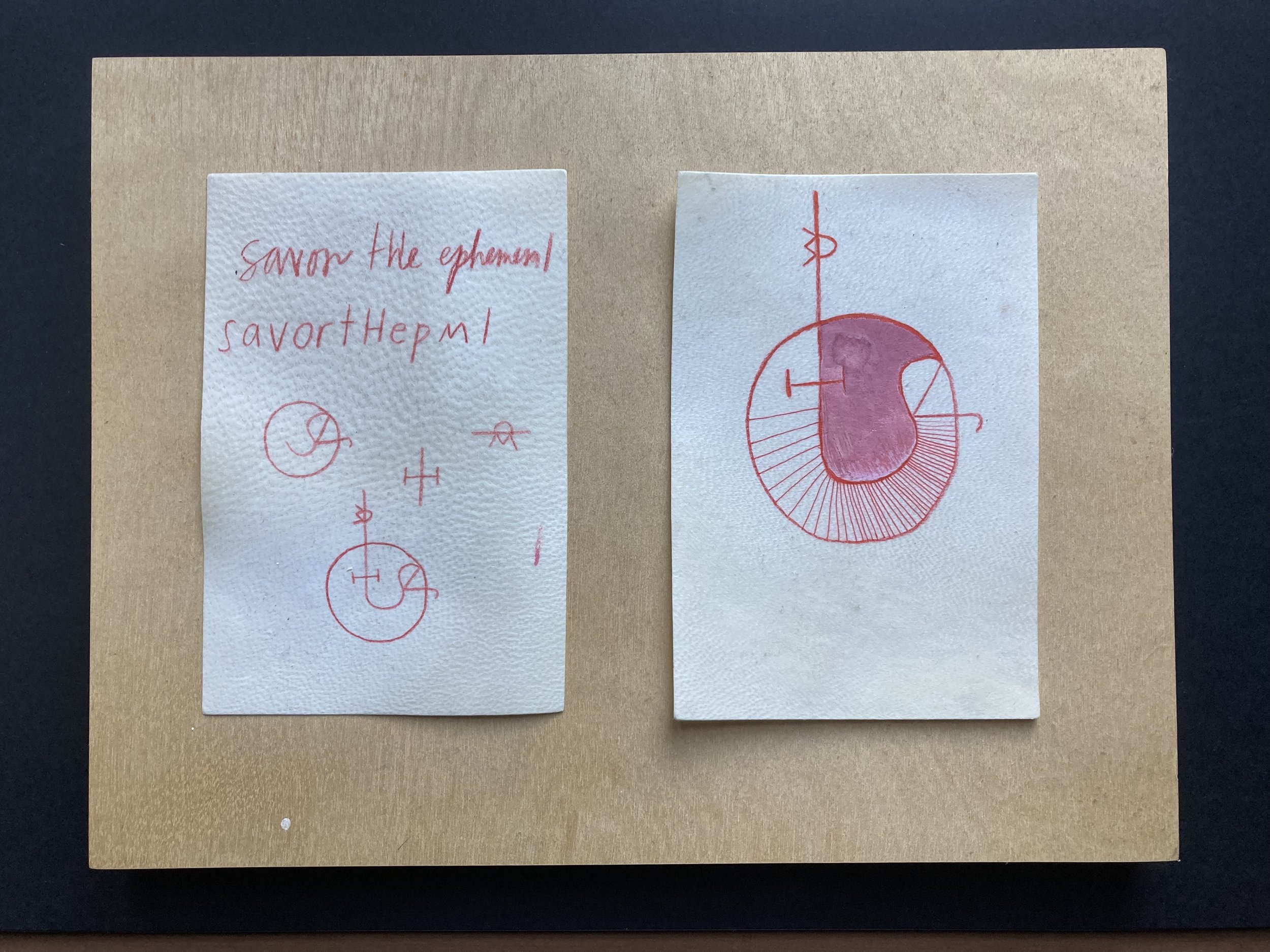
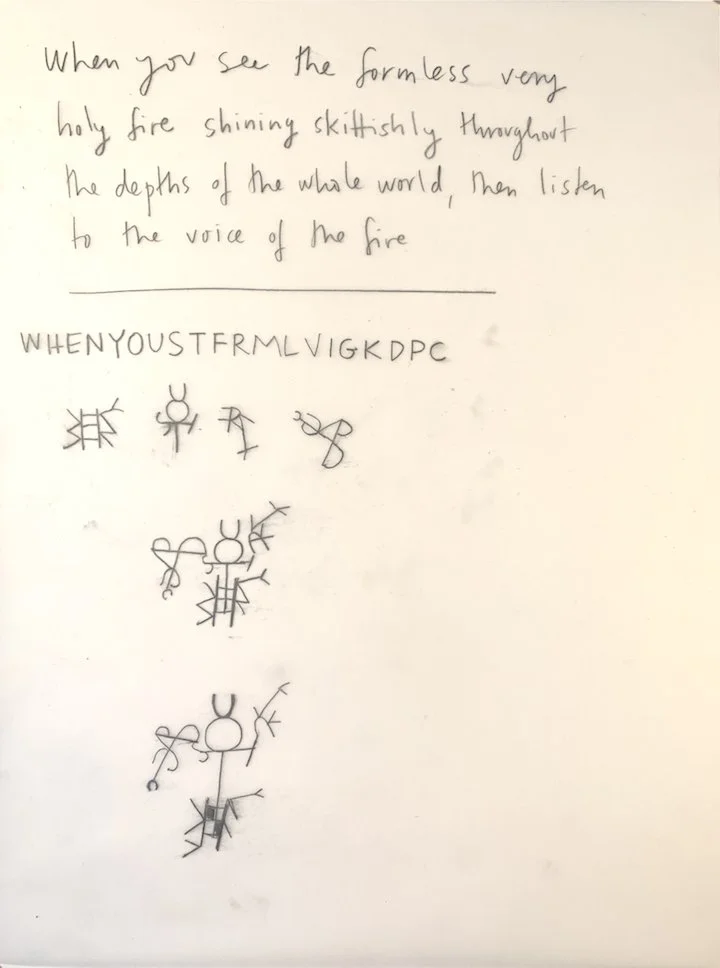
A Book of Hours for the Chthulucene presents for contemplation a series of multimedia diptychs, wherein one drawing documents the transformation of written language into abstraction and symbol via a process known as the “sigil method” --in each case a short quote, precis, or paraphrase from a variety of instructive and inspirational text sources--and this process drawing is paired with its resulting sigil on a facing page recontextualized and ornamented for meditative contemplation in the manner of illuminated manuscripts. The project is ongoing, and periodically small printed reproductions of series of the original diptychs are created in both handmade and mass-produced editions scaled to mimic average smartphone sizes (4 x 6”), intended to accompany, distract from, and heal us of personal issues with our phones. A bibliography for the text sources is found at the end of each portable book.
A Book of Hours for the Chthulucene (referencing Donna Haraway--not HP Lovecraft) is an evolutionary hybrid, a recombinatory mashup whose kin include the almanac, the manual, the primer, and the grimoire—similarly mixing theory, practice, and aesthetic in an illustrated compendium presented for a layperson to contemplate and integrate into quotidian life. Investigating the interdependent historicities of art, science, and magic, AboHftC’s manifestations engage both contemporary neuroscience and ritual technologies as well as historical ontologies and epistemologies.
Like medieval Books of Hours—an ‘hour’ in the Middle Ages being defined as an inexact space of time allotted either to religious or business duties—AboHftC is both a work of art and also a personal tool. Where medieval Books of Hours assisted their owners in monotheistic spiritual devotion with cycles of prayers, images and readings tailored to the hour and season, ABoHftC is both aware of its historicity and built to enhance its beholder’s life from within a dialectical synthesis of what are often divided into false binaries of the scientific/spiritual and self/collective. Its contemplations are tailored to what some might call the Anthropocene or Capitalocene Epoch (and which Donna Haraway, biologist and philosopher-scholar of science and technology studies, University of California Santa Cruz, calls the Chthulucene) and in response to our era’s ubiquitous digital technologies. In addition to self-generated texts, AboHftC draws from source texts ranging from the Chaldean Oracles and 14th century Dzogchen terma texts to thinkers and practitioners such as Masanobu Fukukuoa, David Holmgren, adrienne maree brown and Donna Haraway. The ‘hours’ and seasons of the Chthulucene are collective timespace events arising from ongoing dynamics such as climate change, Big Data surveillance, resource depletion, and human alienation from other lifeforms, and its compendia are grouped according to their Classical and medieval elemental typologies (Earth, Air, Fire, and Water)
Using the book form as a deliberately slow media format the way urban planners deploy obstacular infrastructures for traffic calming or durational performance art challenges both artist and audience to elongate attention in order to experience a rupture from everyday overculture reality, ABoHftC also employs a specific drawing and occult consciousness-shifting technique, Sigilization, wherein written language is morphed into symbolic and abstract shapes and subconscious/transpersonal-level imprinting; it is based on the method first codified by Edwardian-era British artist and occultist Austin Osman Spare and later popularized by contemporary artist-chaos magicians such as performance artist/ musician Breyer (Genesis)-P-Orridge and graphic novelist Alan Moore. The personal palm-sized contemplative component arose purpose-built to the circa-2019 median average scale of handheld devices, to act as complement and countertechnology to smartphones—which, as, Byung-Chul Han says “Represent digital devotion... As a subjectivation-apparatus, the smartphone works like a rosary— which, because of its ready availability, represents a handheld device, too.” (1)
Recent work in neuroscience indicates that reading necessitated a new circuit in Homo sapiens’ brains more than 6,000 years ago. The research of Maryanne Wolfe (Director of the Center for Dyslexia, Diverse Learners, and Social Justice in the Graduate School of Education and Information Studies at UCLA) “depicts how the present reading brain enables the development of some of our most important intellectual and affective processes: internalized knowledge, analogical reasoning, and inference; perspective-taking and empathy; critical analysis and the generation of insight. Research surfac ing in many parts of the world now cautions that each of these essential “deep reading” processes may be under threat as we move into digital-based modes of reading.”(2)
As Wolfe writes, “We know from research that the reading circuit is not given to human beings through a genetic blueprint like vision or language; it needs an environment to develop. Further, it will adapt to that environment’s requirements – from different writing systems to the characteristics of whatever medium is used. If the dominant medium advantages processes that are fast, multi-task oriented and
well-suited for large volumes of information, like the current digital medium, so will the reading circuit.” Researchers Andrew Piper, Karin Littau and Anne Mangen (University of Stavanger, Norway) “emphasize that the sense of touch in print reading adds an important redundancy to information – a kind of “geometry” to words, and a spatial “thereness” for text. As Piper notes, human beings need a knowledge of where they are in time and space that allows them to return to things and learn from re- examination – what he calls the “technology of recurrence”.” (3)
Wolfe also notes, “MIT scholar Sherry Turkle has written that we do not err as a society when we innovate, but when we ignore what we disrupt or diminish while innovating... There’s an old rule in neuroscience that does not alter with age: use it or lose it. It is a very hopeful principle when applied to critical thought in the reading brain because it implies choice. The story of the changing reading brain is hardly finished.”
Other recent work in neuroscience affirms what many of us have already noticed, that digital devices-- especially when used to imbibe in social media—can also negatively impact our moods, psychological states, and mental health. (4) Given neurological plasticity, it seems we could engage with digital innovations with less diminishing of our overall everyday experience if we accurately quantify the impact and effects of the technologies we engage with and then choose also to deliberately exercise a complementary variety of brain processes and somatic experiences throughout our days and hours. While stepping away from screens and into outdoor environments, and engaging in mindful realtime realspace with diverse sensory experiences both alone and with other sentient beings should all be part of a well-rounded life, in keeping with a harm reductionist worldview I have turned my attention to how to better mediate the time in which we all reach for our handheld devices, and how to create transformative and subversive objects which are as convenient and compelling as smartphones. The media I’ve chosen for this project have already been helpful in diminishing my own ADHD symptoms as well as eyestrain, which are both greatly exacerbated by excessive smartphone use.
Another goal of AboHftC through contemplation of its source texts and inspirations is to interrogate received notions of technology and science. For many Americans in 2020, to utter the word “technology” is to conjure a vision of a highly specialized device-dependent practice the existence of which depends entirely upon a confluence of massive amounts of capital, physical, and material resources. There is often a false binary of “technology” vs. “nature,” or “human,” and capital-I Innovation —like his brother with the Invisible Hand, the Free Market--is often blindly submitted to like a cruel god whose sacrificial demands are not questioned (pertinent to ABoHftC: smartphones can only be built with cobalt, which is largely mined by child slaves in Democratic Republic of Congo, and are assembled by suicidal laborers in brutal Foxconn Cities; it is easier to buy cage-free eggs than a cruelty- free smartphone)
If we embrace technological innovation but with critical thinking and an eye to minimizing harm and diminishment of quality of life along with equitable distribution of benefit to all sentient beings, we need to interrogate the metrics that have brought us to our current condition and see where we can do better. We can consider measuring innovation as increased quality of life for increasingly more beings, not just fasterbrightershinier. We can consider that what is frequently labeled innovation in a capitalist society is often not improvement but compulsive change for the sake of planned obsolescence and the economy’s complete dependence on consumers always buying ever more things. The analog handmade book itself was a radical technology when it first began appearing, and we can consider whether, if a technology has already endured, it might not need to be changed so very much from its first iteration;
we can develop a more diverse repertoire of expectations for change, and look to timescales of biological evolutionary processes, such as the move from quadrupedal to bipedal locomotion, and linguistic adaptations, and see that some things are worth largely sticking with; we can avoid throwing babies out with the bathwater, to use an idiom still in use in English and which linguists first date to 1512, in German.
We can also consider that our allegedly technologically-advanced society is often comparatively backward when it comes to what Michel Foucault termed technologies of the self (where individuals, by their own means or with the help of others, act on their own bodies, souls, thoughts, conduct, and way of being in order to transform themselves and attain a certain state of health, perfection, wisdom, happiness, and social/collective improvement). We have delegated so many of our powers of observation and measurement to machines that we begin to trust them more than ourselves though they, may too, be fallible. The practice of industrialized medicine’s fetishizing of laboratory testing to achieve diagnosis has resulted in failure to care properly for patients whose afflictions are not easily or reliably mapped through known testing, or who may be victim to testing error—my own experience with tickborne disease educated me in the limitations of doctors behaving as oracles for automated deities--and the dependence on expensive infrastructure makes high-tech laboratory diagnosis out of reach to many people on the planet. As a Tibetan medicine practitioner friend--whose tradition, arising in a vast and specific ecosystem, teaches subtle and sophisticated clinical diagnosis through sharpening the doctor’s skills of sensory perception and observation—says: you can’t do an MRI on a mountain, with no electricity nearby. We can consider that cultures besides Western Industrialized ones have refined technologies of the self to extreme sophistication that we would do well to see as equal if not superior in many situations.
The timespace this Book of Hours arises for I first encountered so named in Donna Haraway's Staying with the Trouble: Making Kin in the Chthulucene. Haraway conceptualizes our current epoch not as some would, the Anthropocene--its climax, the planet's Sixth Extinction; its center, humans--but as the Chthulucene: a post-anthropocentric affirmation of the interdependent relations between the earth and all of its inhabitants, recognizing the process of sym-poiesis, or making-with, rather than auto-poiesis, or self-making, as the primary biological process. I’ve chosen to take Haraway’s conceptualization deeply to heart, and it informs AboHftC on multiple levels.
In Staying with the Trouble, Haraway writes,
“I insist that we need a name for the dynamic ongoing symchthonic forces and powers of which people are a part, within which ongoingness is at stake... I am calling all this the Chthulucene—past, present, and to come. These real and possible timespaces are not named after SF writer HP Lovecraft's misogynist racial-nightmare monster Cthulhu (note spelling difference), but rather after the diverse earthwide tentacular powers and forces and collected things with names like Naga, Gaia, Tangaroa, Terra... “My” Cthulucene, even burdened with its problematic Greek-ish rootlets, entangles myriad temporalities and spatialities and myriad intra-active entities-in-assemblages—including the more-than-human, other-than-human, inhuman, and human-as- humus.”
“Chthulucene is a simple word. It is a compound of two Greek roots (khthon and kainos) that together name a kind of timeplace for learning to stay with the trouble of living and dying in response-ability on a damaged earth. Kainos means now, a time of beginnings, a time for ongoing, for freshness. Nothing in kainos must mean conventional pasts, presents, or futures. There is nothing in times of beginnings that insists on wiping out what has come before or, indeed, wiping out what comes after. Kainos can be ful of inheritances, of remembering, and full of comings, of nurturing what might still be. I hear kainos in the sense of thick, ongoing presence, with hyphae infusing all sorts of temporalities and materialities. Chthonic ones are beings of the earth, both ancient and up-to-the-minute... Chthonic ones are monsters in the best sense; they demonstrate and perform the material meaningfulness of earth processes and critters. They also demonstrate and perform consequences. Chthonic ones are not safe; they have no truck with ideologues; they belong to no one; they writhe and luxuriate in manifold forms and manifold names in all the airs, waters, and places of earth... No wonder the world's great monotheisms in both religious and secular guises have tried again and again to exterminate the chthonic ones.
The scandals of times called the Anthropocene and Capitalocene are the latest and most dangerous of these exterminating forces. Living-with and dying-with each other potently in the Chthulucene can be a fierce reply to the dictates of both Anthropos and Capital.” (5)
1 Byung-Chul Han, Psycho-politics: Neoliberalism and New Technologies of Power, 2017: Verso. p12
2 and 3
https://www.theguardian.com/commentisfree/2018/aug/25/skim-reading-new-normal-maryanne-wolf
and https://www.noted.co.nz/currently/social-issues/reading-digital-world-affects-your-brain- development/
4 https://www.thecut.com/article/how-facebook-affects-your-happiness.html
5 Donna J. Haraway, Staying With the Trouble: Making Kin in the Cthulucene, Duke University Press, 2016.