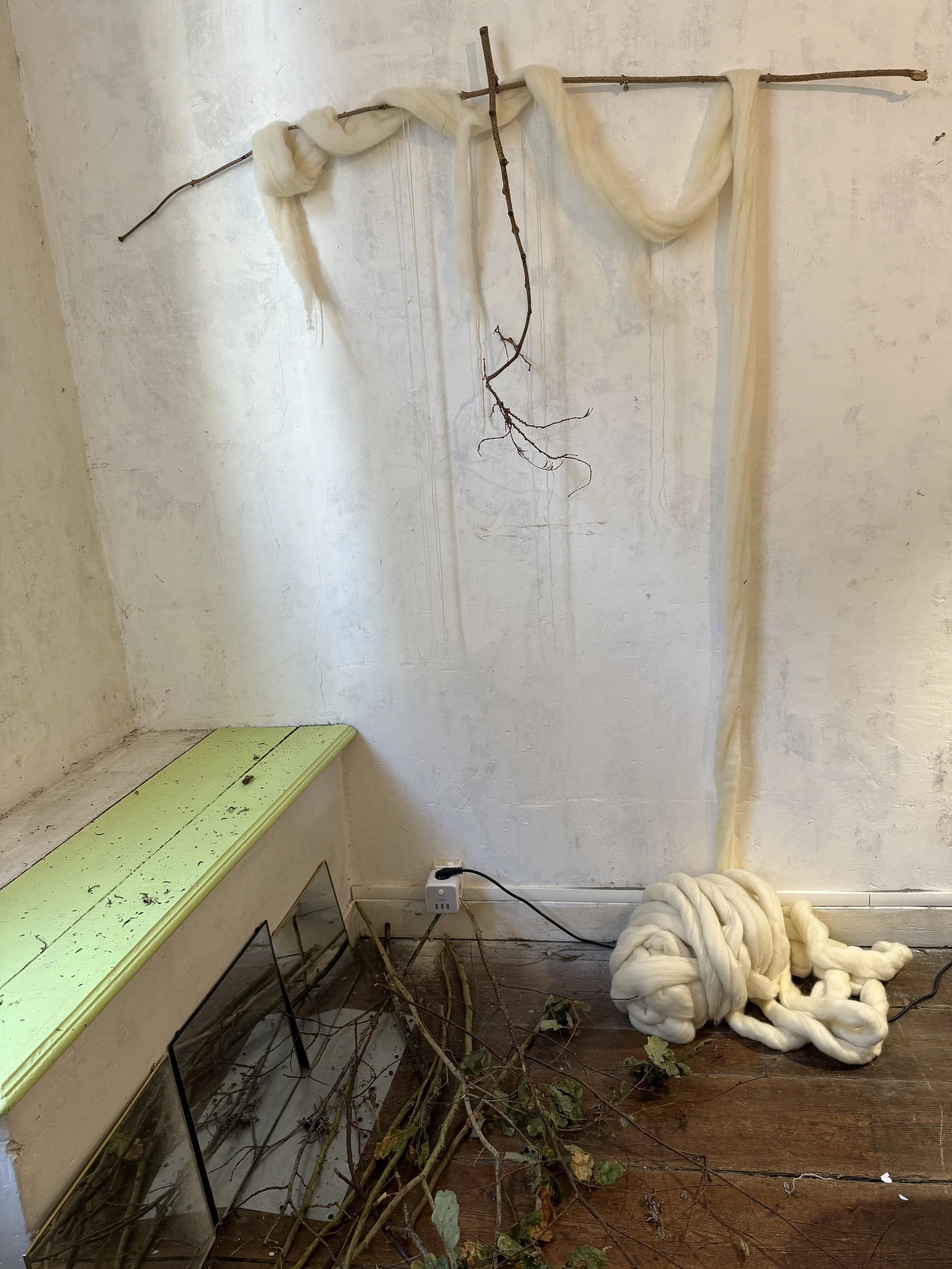
After beginning to investigate some of the traditions and practices of my personal ancestors as part of a larger awareness around decolonization's relationship with collective ancestral healing, I encountered the historical figure of the Völva, a professional and often itinerant seer and ritual specialist documented as having been active in a variety of Scandinavian cultures from at least the early Medieval period (and presumed, also much earlier). Culturally, the völva's work was seen as a serious, socially powerful practice connected with fate, prophecy, and the shaping of events. Her (in her society, the role was strictly gendered) work was rooted in speech, ritual, knowledge, and reputation and her influence on the future of the world arose through understanding how it already worked. While there is no known existing contemporary practice contiguous with the historical practice, we do have text sources describing the people and the practice, as well as archeological findings and research, all of which has contributed to contemporary reconstructive practices. Völva were associated with the spinning of fibers, and their regalia included a ritual staff modeled on the distaff (used to spin flax on a drop-spindle).
–the most well-known prophecy of a Völva is cited in the Voluspa poem, which cannot be definitively dated but is believed to have first been written down in the 9th century in Old Norse and is quoted extensively in Snorri Sturluson’s Prose Edda and the Poetic Edda, the earliest manuscript of which dates from the 13th century, but it is thought to be much older, and is generally believed to have been a minstrel poem that was passed down orally. The Voluspa verses recount the Norse god Odin waking a dead Völva at her tomb, demanding a prophecy, and interrogating her about the future of the world and the cosmos. I am particularly taken by two of the 60 strophes of this poem, in which the Völva describes her visions, of both an apocalyptic scenario and yet also, following it, a rebirth/regreening of the land:
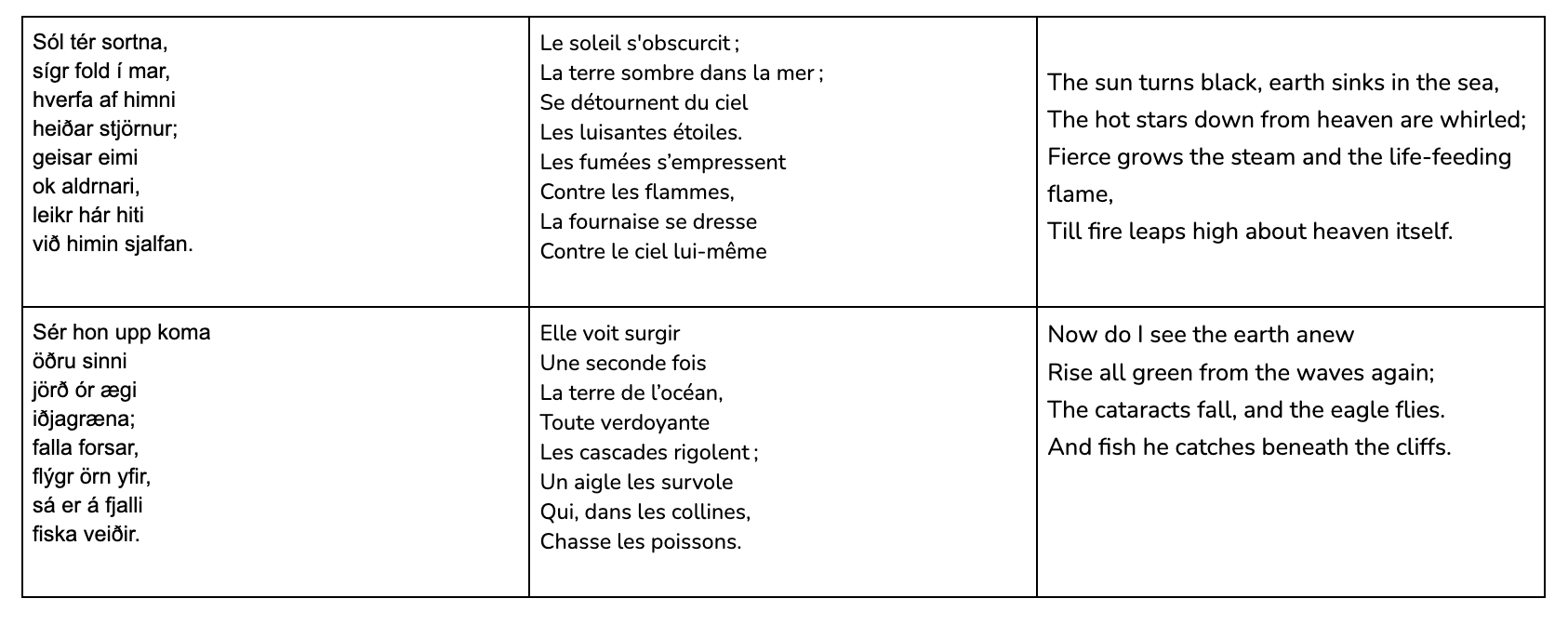
(Traduction en français: https://tisserande-de-nuages.com/ English translation: Henry Adams Bellows)
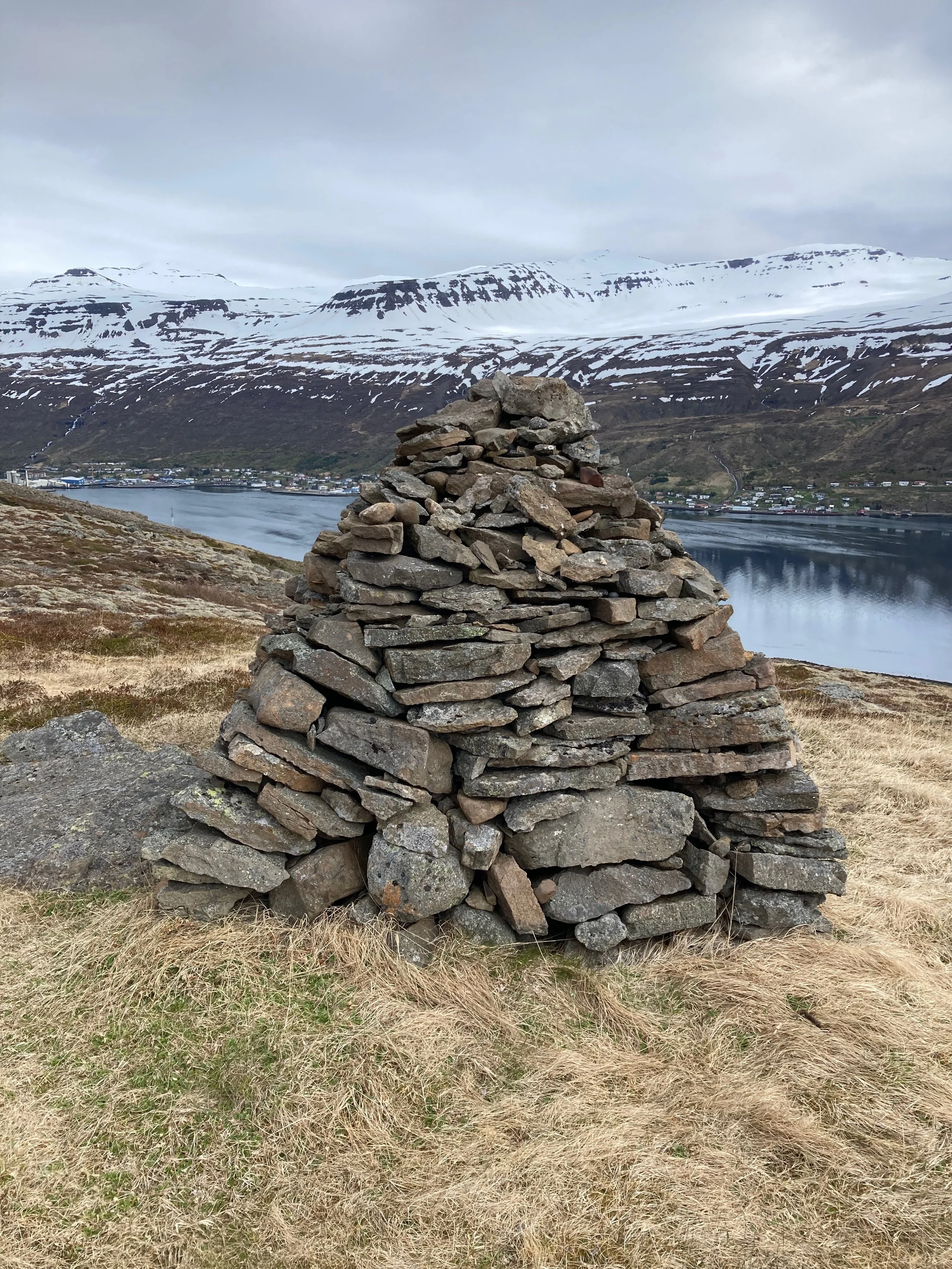
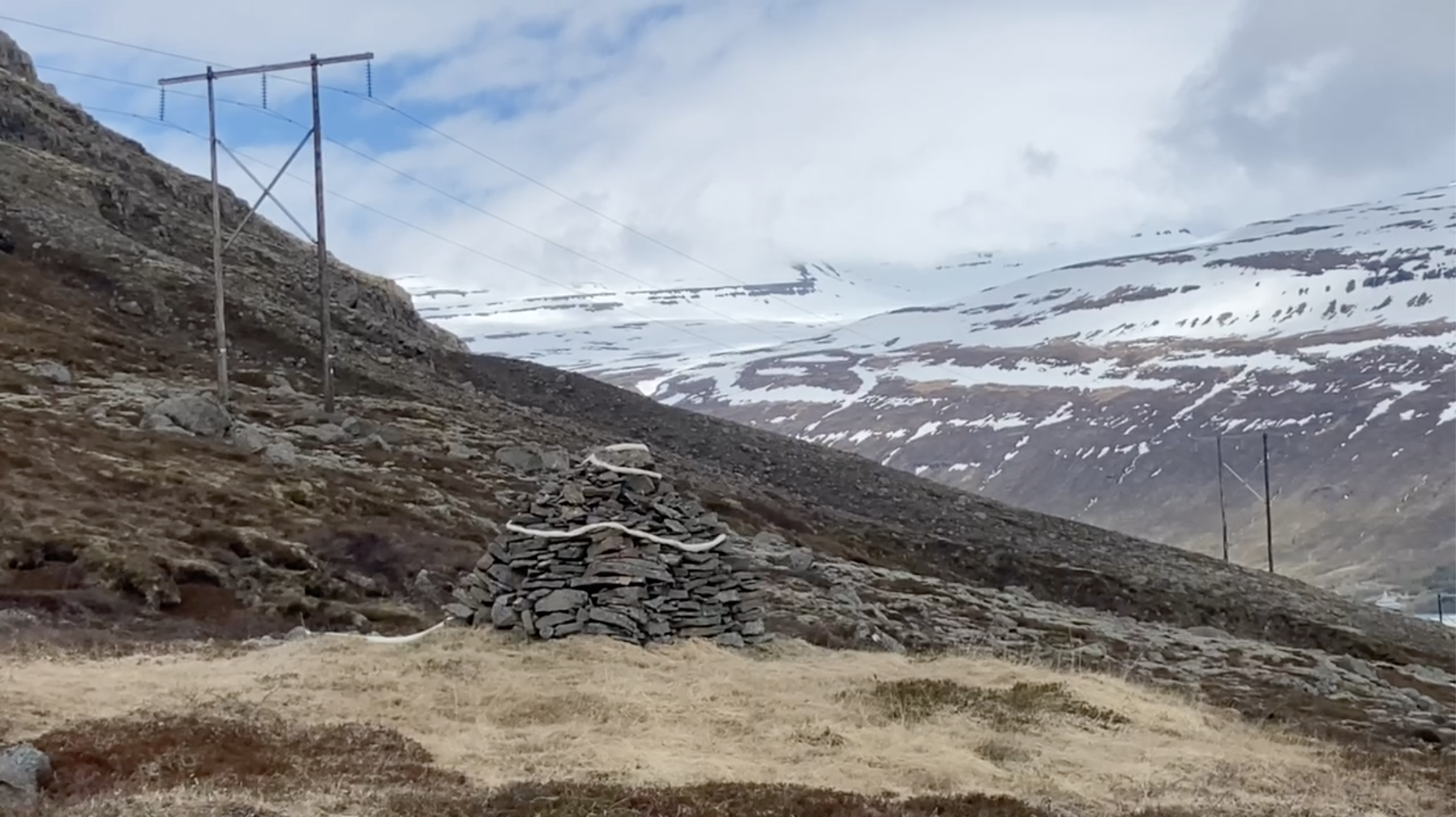
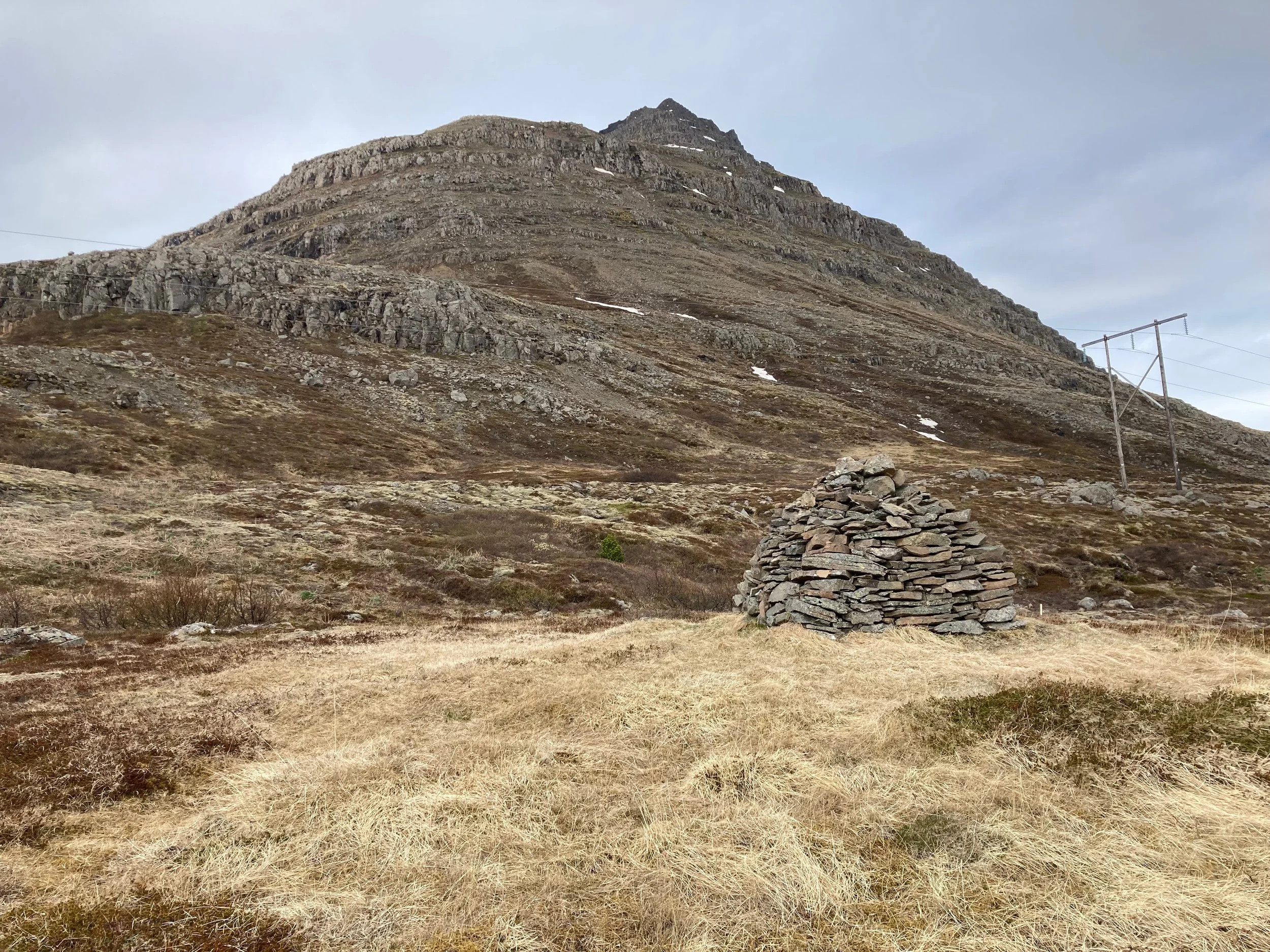
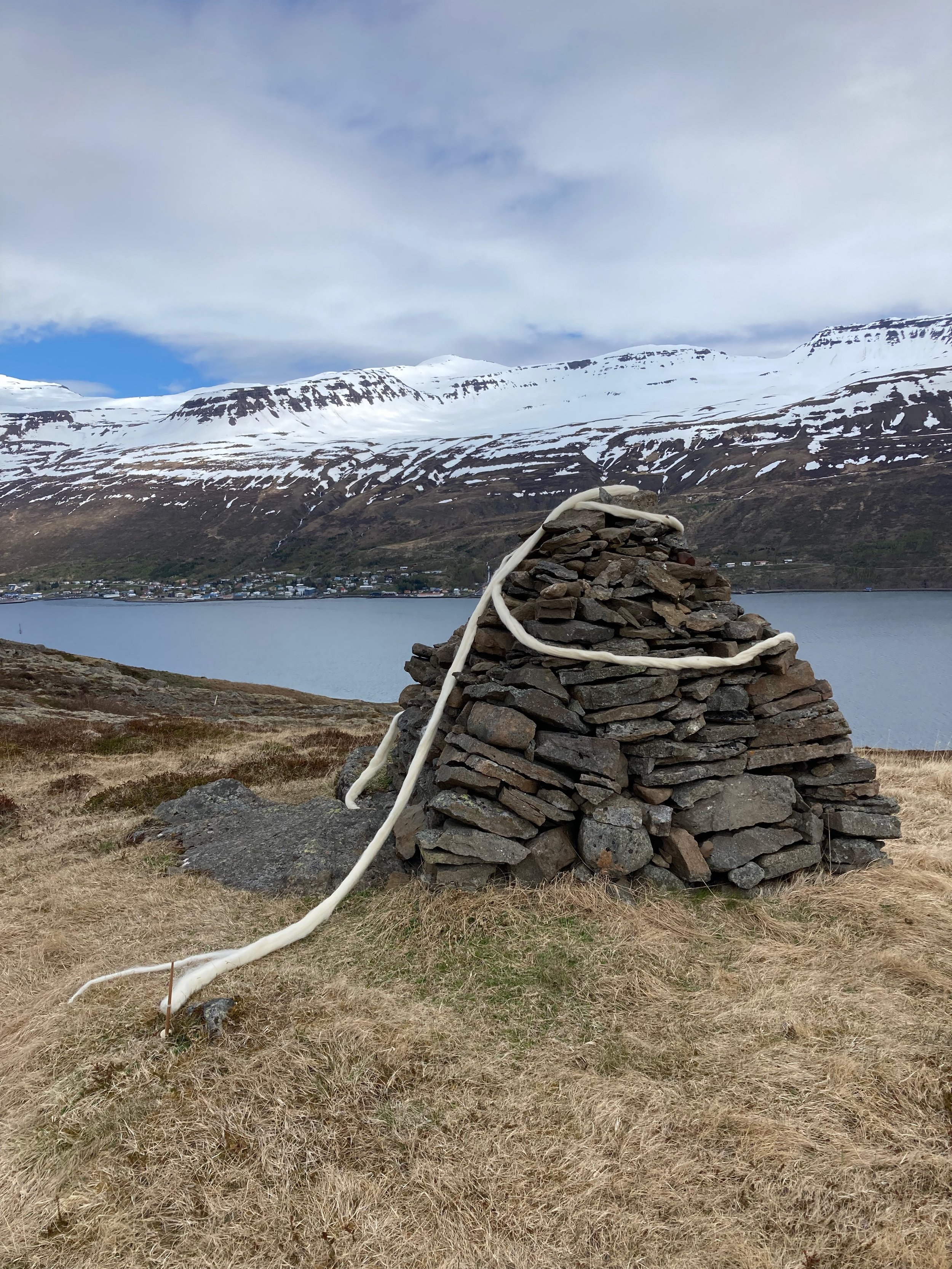
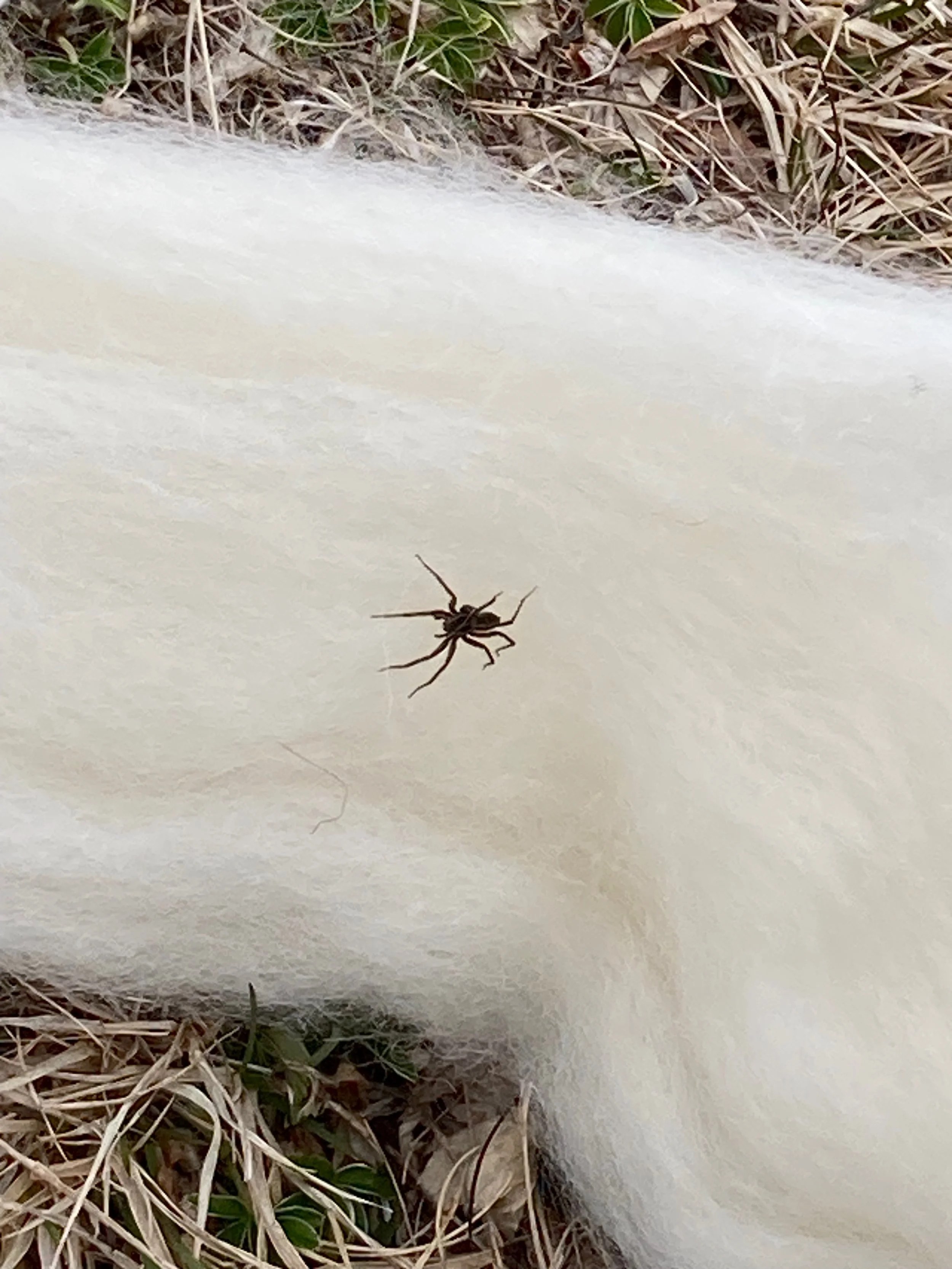
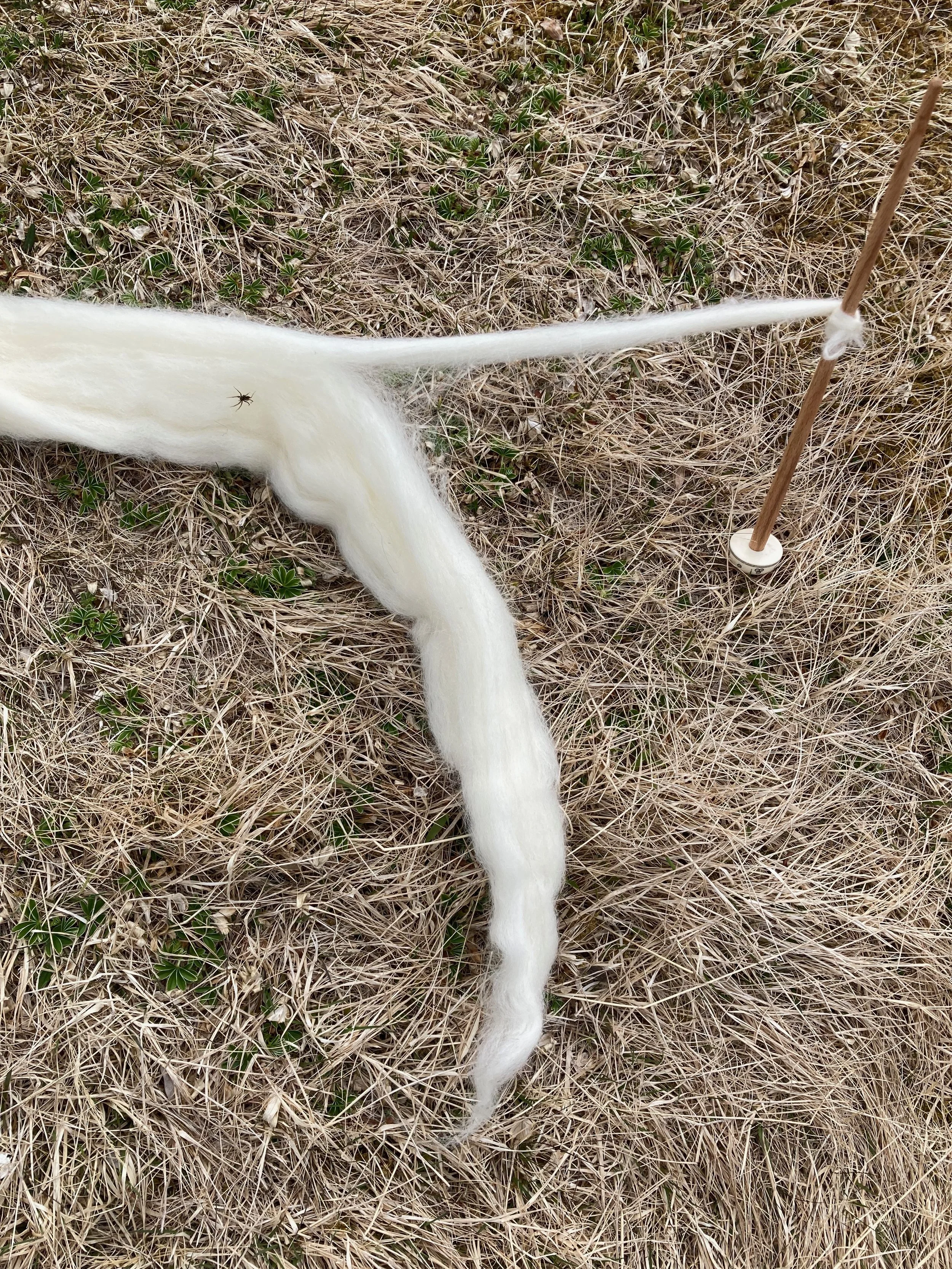
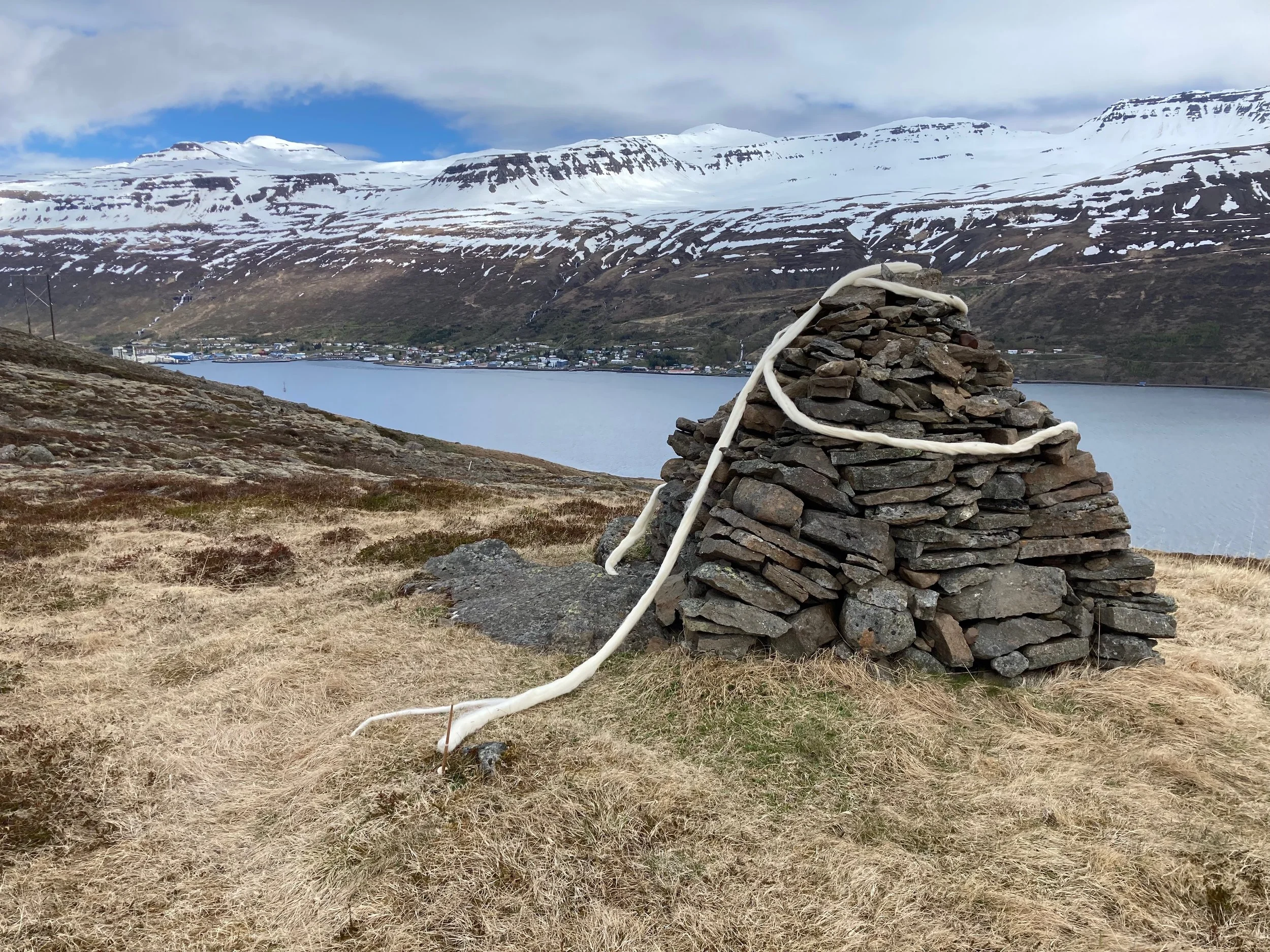
In 2024 I made a pilgrimage to Hólmaháls Iceland, where I made ritual offerings and performance which I documented in photo/video, at the stone temple/tomb mound of a Völva. The local lore is that this Völva lived in Sómastaðir in the 17th century, and asked that when she died she be buried where the best view of Reyðarfjörður was–vowing to her community that the fjords Eskifjörður and Reyðarfjörður would never be attacked from sea as long as her bones remained intact. Local tradition also says that as long as stones are regularly added to the grave, nothing terrible will happen in the fjords–invoking also the importance of collective care and generative practices. In crafting ritual offering I sought both traditionally-appropriate and ecologically-sensitive materials and actions, and primarily worked with clean new wool roving and spinning movement.
The völva in the Voluspa–maintaining the quotidian generative lifework of spinning while recounting a disaster-complemented-by-regeneration cycle–and the völva in Hólmaháls, whose protection is invoked through collective constructive action–have become for me embodiments of how to be a person abiding during polycrisis/extreme environmental events, tending to the simple, repetitive necessary tasks while also engaging with "all of the things," and offering aid and protection to others.
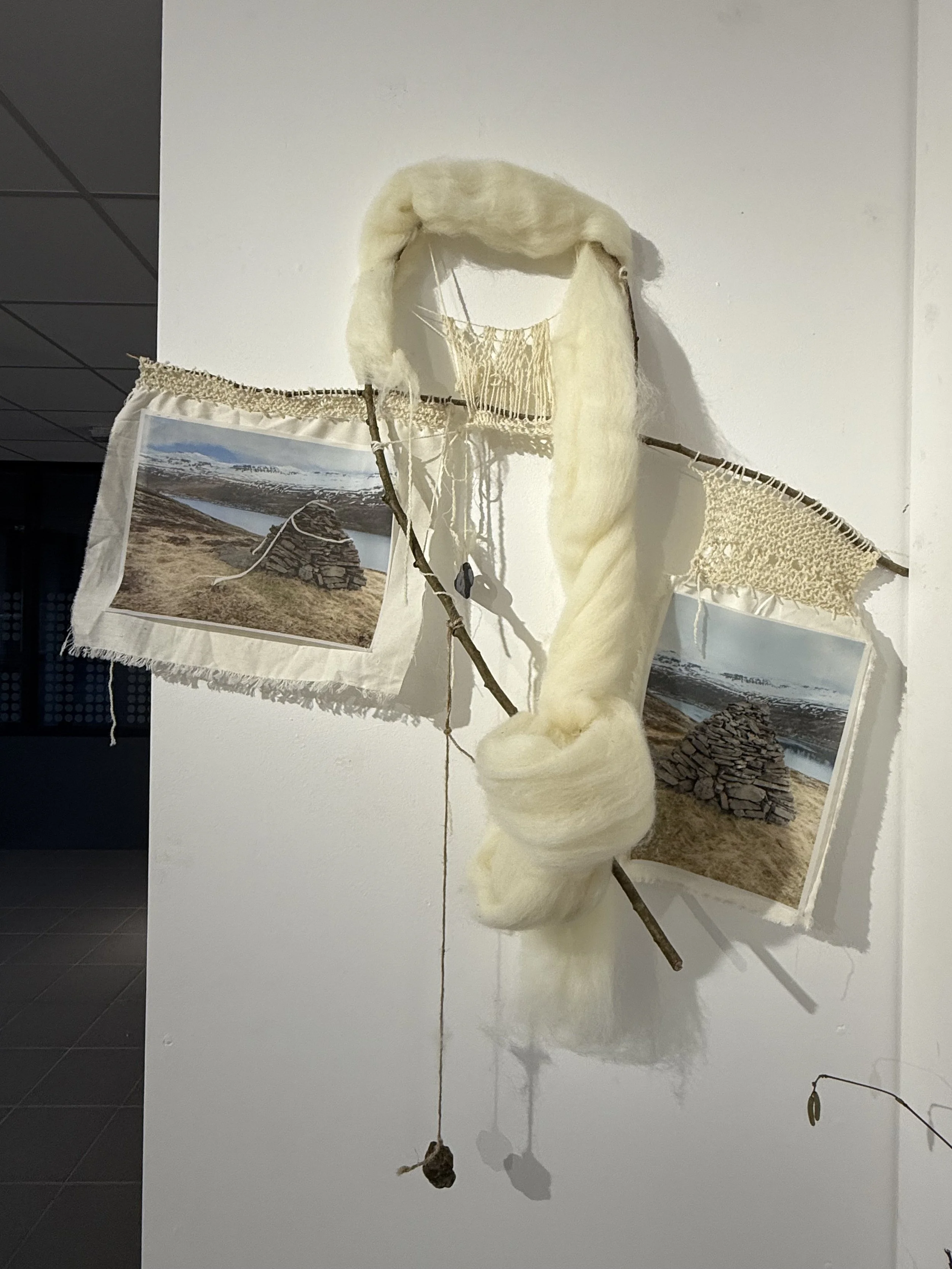
This work remains in progress. I have subsequently taken up simple fiber practices with a special interest in low-tech ancient methods, including drop spindle spinning, sprang (a type of early handweaving done with sticks) as well as knitting and have begun to incorporate these into the presentation of images; and have also investigated the mythic and historical links between spinning, weaving and fiber arts and my most local ecosystem's history and lore, that of Bretagne, France. Here, as in several other European regions, megalithic structures and arrangements and also natural stone formations such as caves and prominent rocks, are often associated with mythic, magical and supernatural spinning women; I'm interested in this fiber art activity as a conductor between the landscape and the human, between historical periods, as an aspect of story and history transmission.
With the material and performance of practice aspects of fiber arts and fabric, I am interested in exploring the polyvalent potentials for handcraft as a somatic procedure that enables human consciousness shifts as well as personal embodied experience of historical practice; and as a generative personal act that can be practiced at both the individual and communal levels to produce an essential utilitarian material in a very human way that counters and reminds us another ways is possible than the current predominant extractive, exploitative, and waste-producing industrialized manufacturing. Informed by ecological crisis and collapse-awareness,
Informed by ecological crisis and collapse-awareness, in the doing of this embodied practice piece of the project, I perform a microcosmic gesture of how a person can navigate or even instigate the decelerations of technology, extractive capitalism, and hyperconsumption towards healing and harm reduction.